


We will get back to you within 1 working day!
Thank you so much for contacting Sojourn Abroad! We can’t wait to welcome you in China!
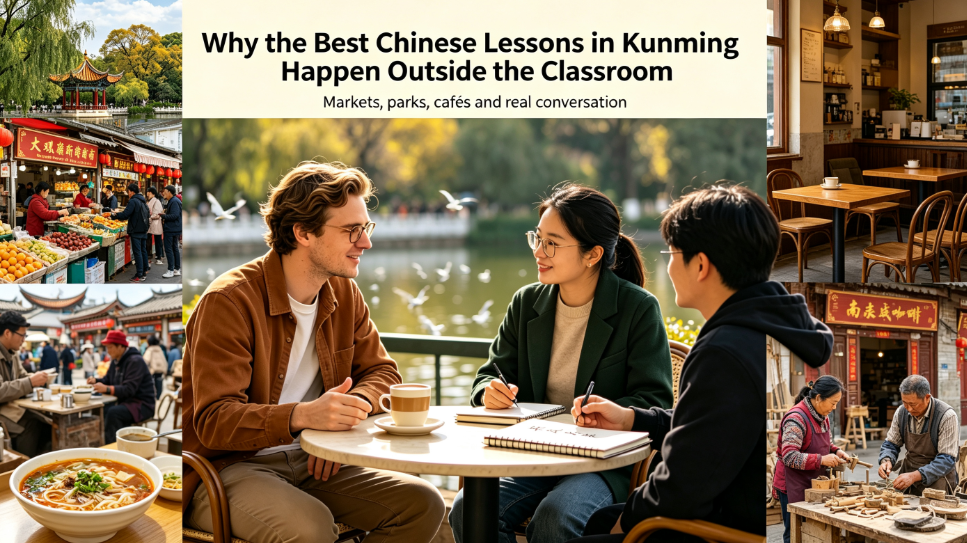
A classroom is a useful place. It gives you structure, a syllabus, and a teacher who can explain grammar in ways a textbook cannot.
But a classroom has limits. It cannot replicate the speed of a real conversation. It cannot teach you how to respond when someone asks a question you did not expect. It cannot prepare you for the moment when a vendor hands you change and says something you have never heard before.
Those moments happen outside. And in Kunming, they happen constantly.
For anyone who wants to take Chinese classes in Kunming, the classroom is where learning starts. But the city is where it comes alive.

Walk into Daguan Zhuanxin Farmers’ Market (大观篆新农贸市场) on Xinwen Road, and you are immediately surrounded by language.
Vendors call out prices. Customers compare quality. Money changes hands. It is not a classroom exercise — it is real life, moving at real speed. With over 650 stalls spread across 20 acres, this market is one of Kunming’s busiest and most authentic places to practice.
This is where numbers stop being abstract. You learn duōshao qián (多少钱 — how much) because you need to know. You learn piányi yīdiǎn (便宜一点 — a little cheaper) because you want a better deal. You learn the names of vegetables, fruits, and spices because you are buying them.
Every interaction is a mini-lesson. And because the stakes are low — you are just buying lunch — you are free to make mistakes.
For anyone who wants to learn Mandarin in Kunming in a way that sticks, Daguan Zhuanxin Market is one of the best classrooms the city has to offer.

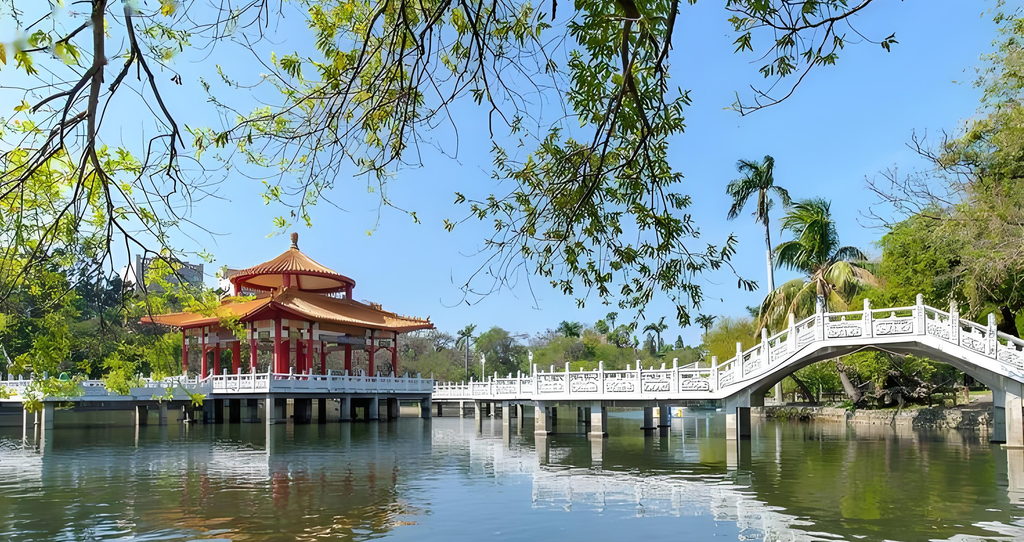
Green Lake Park (翠湖公园) is not a quiet place. It is full of life — people practicing tai chi, playing chess, singing folk songs, and chatting on benches.
For a language learner, the park offers something rare: slow, unhurried conversation.
Nobody is rushing in Green Lake Park. People have time. They are happy to talk about the weather, ask where you are from, or explain what they are doing. These are not deep conversations, but they are real ones — and they are exactly the kind of practice that builds fluency.
From November to March, thousands of red-billed gulls migrate here from Siberia, creating a lively scene as visitors feed them from the willow-lined shores. It is the kind of moment that makes you want to pull out your notebook and practice writing characters.
Sit in Green Lake Park for an afternoon. Listen. Ask a question. Answer one. You will learn more about spoken Chinese than you would from a dozen textbook dialogues.
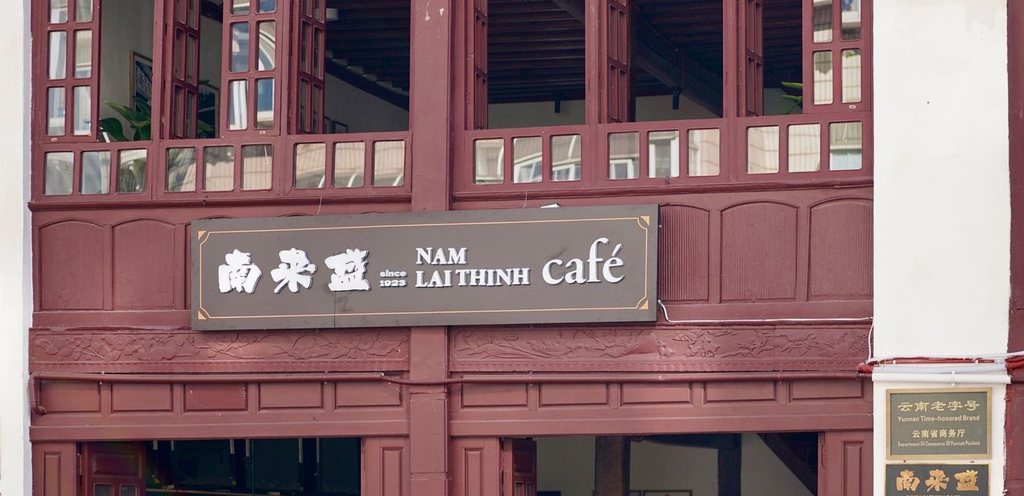
Nanlaisheng Café (南来盛咖啡馆) near Huashan South Road is one of Kunming’s oldest cafés, with over 80 years of history. It was a gathering place for intellectuals and refugees during the war years, and it still carries that quiet, reflective atmosphere today.
Cafés like Nanlaisheng are quiet in a way that helps learners. Conversations happen at a natural pace. People pause. They repeat themselves. They do not switch to English.
That rhythm is rare. In most public places, the pressure to keep up is intense. In a place like Nanlaisheng, you can sit with a cup of coffee and let the language wash over you. You do not need to speak. You just need to listen.
Over time, this kind of passive listening trains your ear in a way that classroom audio cannot. You start hearing the language as it actually sounds. You stop translating in your head.
Many learners who pursue Chinese studies in Kunming find that their listening improves fastest not in class, but in the hours they spend sitting in places like Nanlaisheng and Green Lake Park.
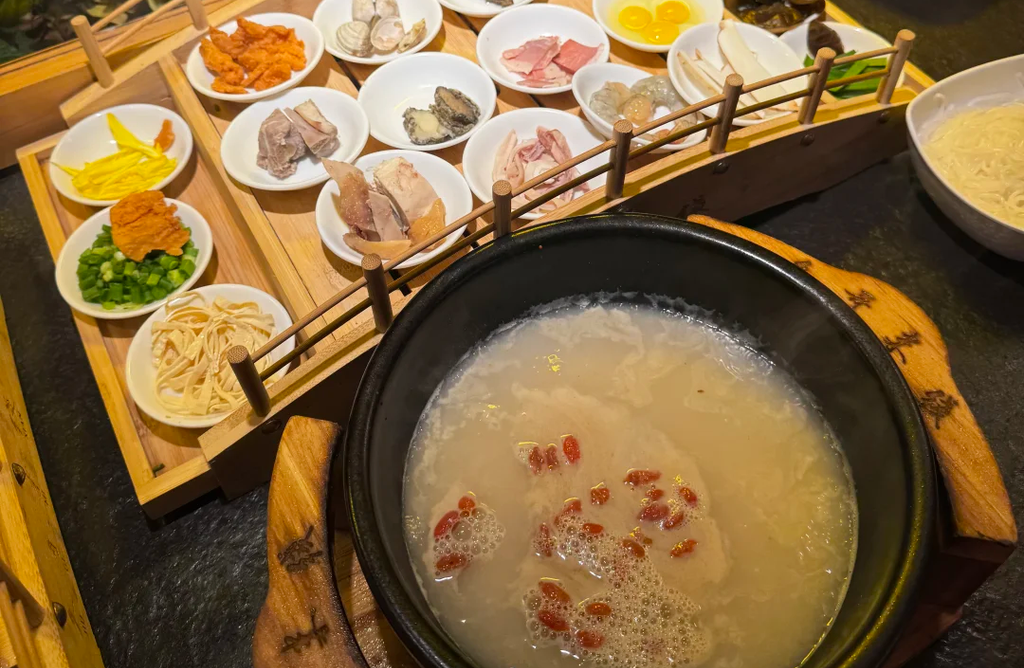
Walk into any Crossing-the-Bridge Rice Noodle shop (过桥米线店) in Kunming, and you are immediately forced to speak.
The waiter will ask how many people, which broth, which toppings. You have to answer. You have to understand the follow-up questions. You have to know the sequence: first the meat, then the vegetables, then the noodles.
This is where vocabulary becomes physical. You learn tāng (汤 — soup), ròu (肉 — meat), mǐxiàn (米线 — rice noodles), tàng (烫 — hot). You learn the verbs for putting things in, stirring, and waiting.
And because you are hungry, because the food is in front of you, because the waiter is waiting — you remember these words. They are not abstract. They are survival.
For anyone who wants to study Chinese in Kunming in a way that feels real, a bowl of Crossing-the-Bridge Rice Noodles is one of the best lessons you can get.
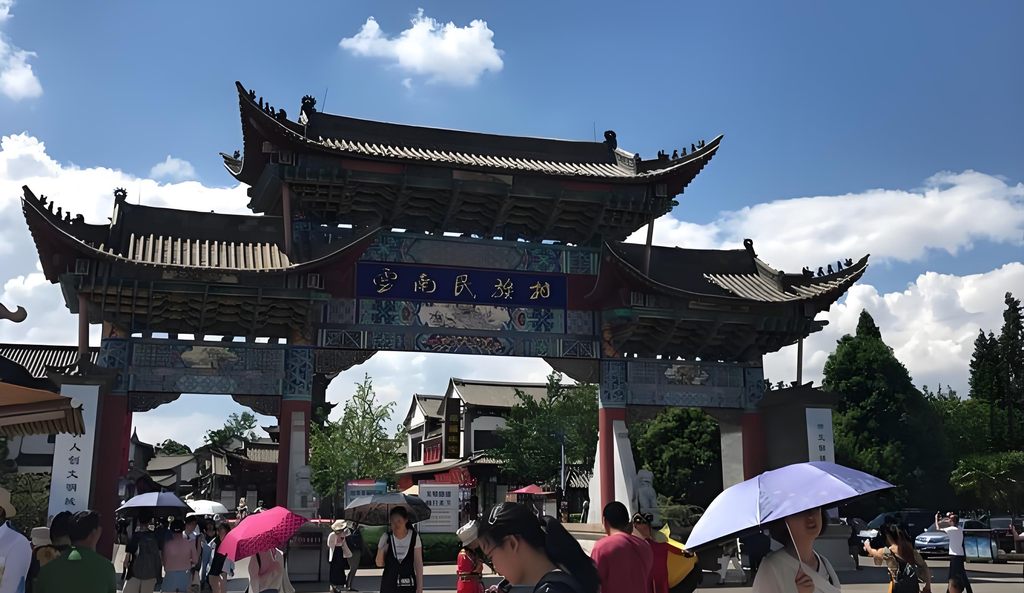
The Yunnan Nationalities Village (云南民族村) on the shores of Dianchi Lake is not a theme park. It is a living archive of the province’s twenty-six ethnic groups, with life-sized replicas of their traditional villages.
For a language learner, it is a vocabulary goldmine. You see buildings: fángzi (房子 — house), tíngzi (亭子 — pavilion), qiáo (桥 — bridge). You see clothing: qúnzi (裙子 — skirt), màozi (帽子 — hat), yínshì (银饰 — silver ornaments). You see food: guòqiáo mǐxiàn (过桥米线 — Crossing-the-Bridge Rice Noodles), zhúsǔn (竹笋 — bamboo shoots), kǎoròu (烤肉 — grilled meat).
The artisans here are not actors. They are weavers, dyers, silversmiths, and musicians who practice their traditions every day. They are also patient teachers. You can stand beside a Bai woman as she dyes cloth and ask: “Zhè shì shénme yánsè?” (这是什么颜色? — What color is this?). She will tell you. You can watch a Yi silversmith and ask: “Zhège zěnme zuò?” (这个怎么做? — How do you make this?). He will explain.
These conversations are short, practical, and real. They are exactly the kind of practice that builds fluency.
For anyone who wants to learn Mandarin in Kunming, the Nationalities Village offers something that textbooks cannot: a living dictionary.
Classrooms give you knowledge. But Kunming gives you something more valuable: the chance to use that knowledge in real life.
Daguan Zhuanxin Market teaches you numbers. Green Lake Park teaches you patience. Nanlaisheng Café teaches you listening. A bowl of Crossing-the-Bridge Rice Noodles teaches you survival. The Yunnan Nationalities Village teaches you culture.
Together, they turn language learning from a subject into a way of life. And that is why the best Chinese lessons in Kunming do not happen in classrooms. They happen wherever you are willing to speak.
Thank you so much for contacting Sojourn Abroad! We can’t wait to welcome you in China!