


We will get back to you within 1 working day!
Thank you so much for contacting Sojourn Abroad! We can’t wait to welcome you in China!
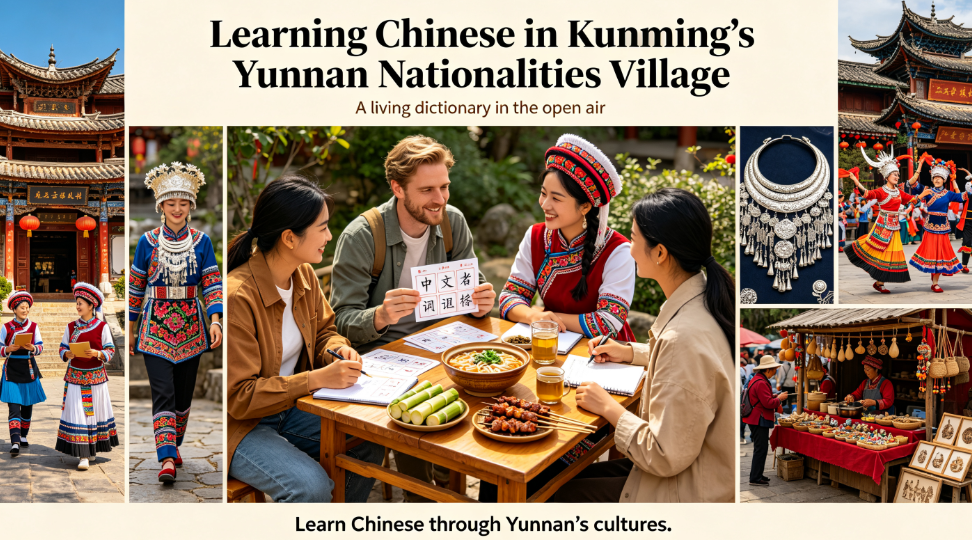
Every learner needs a break from the textbook. But not all breaks are equal. Some take you away from the language. Others pull you deeper into it.
The Yunnan Nationalities Village, located on the shores of Dianchi Lake in Kunming, is the second kind. It is a sprawling park where the province’s twenty-six ethnic groups have built life-sized replicas of their traditional villages. You can walk from a Bai courtyard in Dali to a Dai bamboo house to a Tibetan monastery in a single afternoon.
For anyone trying to learn Chinese in Kunming, this is not just a tourist attraction. It is a classroom without walls.
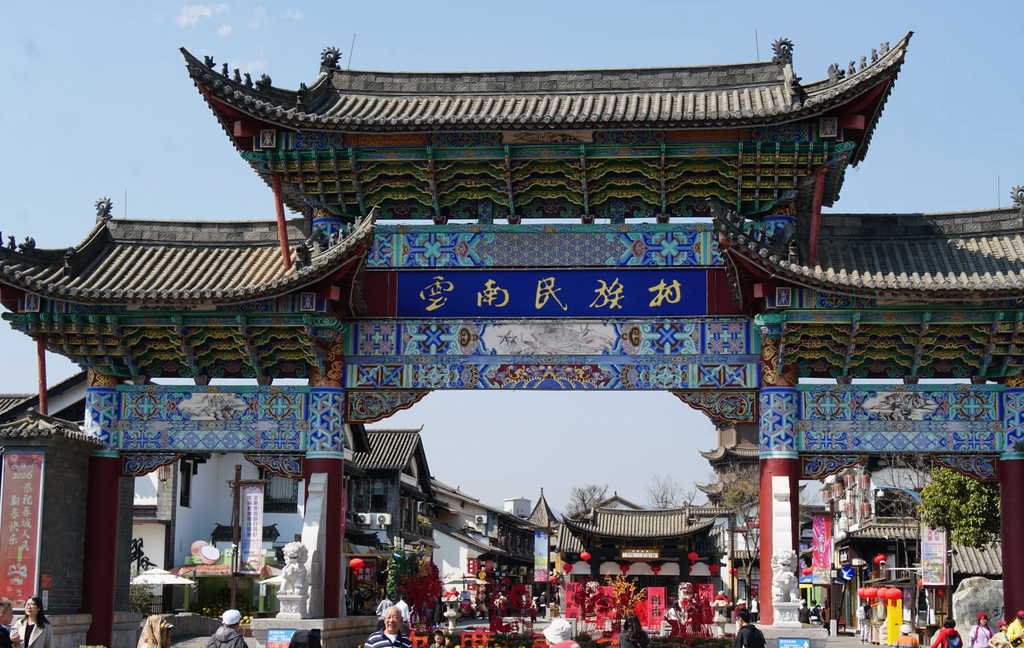
The first thing you notice at the Nationalities Village is how much there is to name.
You see buildings: fángzi (房子 — house), tíngzi (亭子 — pavilion), qiáo (桥 — bridge). You see clothing: qúnzi (裙子 — skirt), màozi (帽子 — hat), yínshì (银饰 — silver ornaments). You see food: guòqiáo mǐxiàn (过桥米线 — Crossing-the-Bridge Rice Noodles), zhúsǔn (竹笋 — bamboo shoots), kǎoròu (烤肉 — grilled meat).
Each of these words is attached to something you can see, touch, or taste. That is what makes them stick. You are not memorizing a list. You are describing the world in front of you.
For learners who study Mandarin in Kunming, the Nationalities Village offers something that textbooks cannot: a living dictionary.
The village hosts festivals throughout the year. The Water Splashing Festival in April. The Torch Festival in summer. The Third Month Fair in spring.
Each festival brings its own vocabulary. You learn greetings. You learn the names of foods. You learn how to wish someone good fortune. And because the festivals are joyful, the words come with emotion — which makes them easier to remember.
That is the power of learning a language through culture. The words are not abstract. They are tied to experiences.
For anyone who wants to improve their Chinese in Kunming, the festival calendar is a study schedule in disguise.
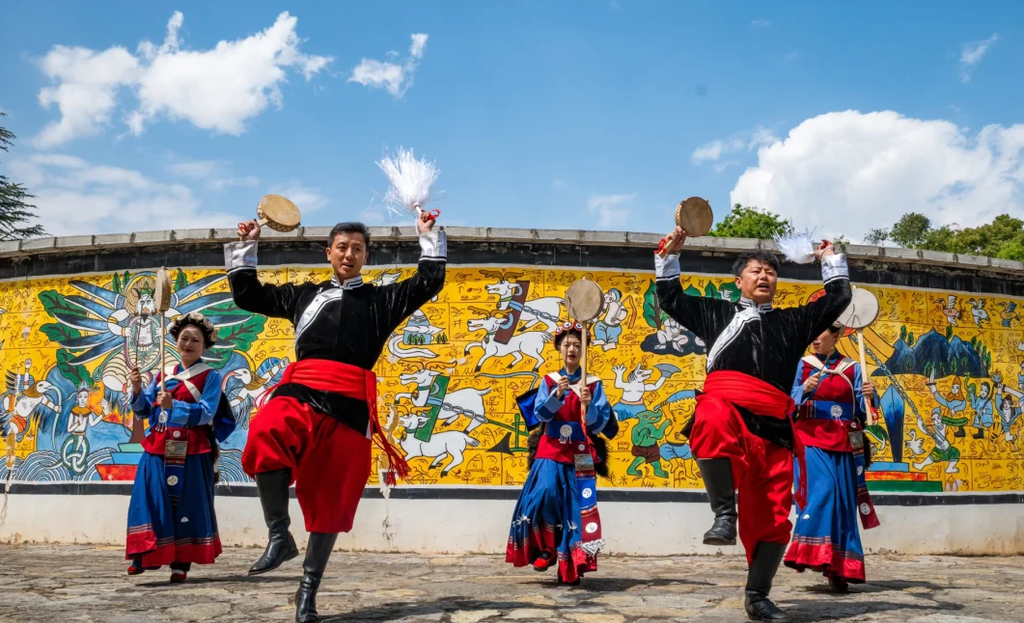
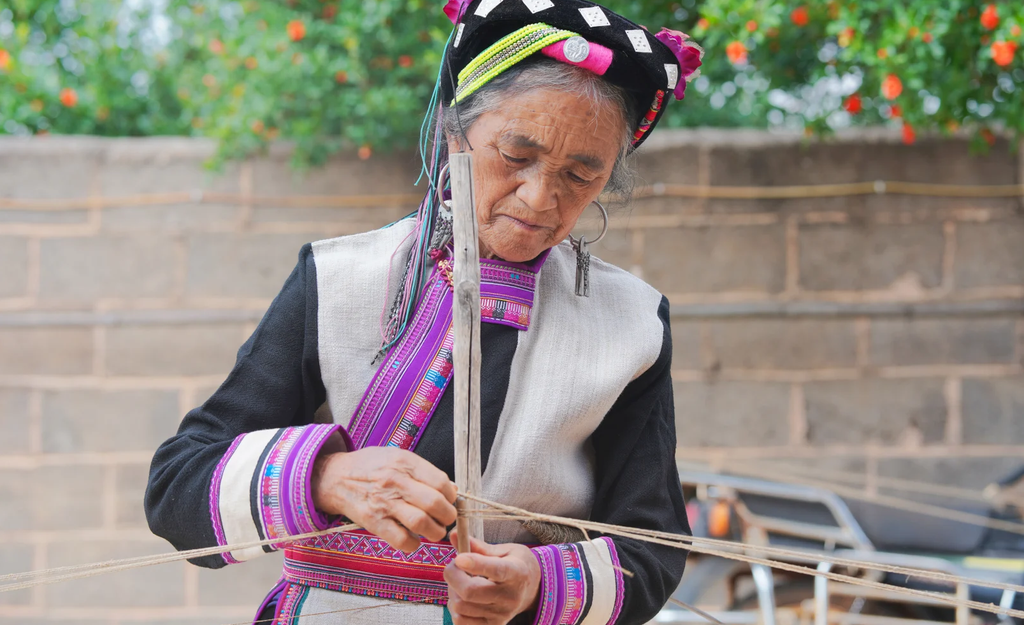
One of the best parts of the Nationalities Village is the artisans. They are not actors. They are craftspeople — weavers, dyers, silversmiths, musicians — who practice their traditions every day.
They are also patient teachers.
You can stand beside a Bai woman as she dyes cloth and ask: “Zhè shì shénme yánsè?” (这是什么颜色? — What color is this?). She will tell you. You can watch a Yi silversmith and ask: “Zhège zěnme zuò?” (这个怎么做? — How do you make this?). He will explain.
These conversations are short, practical, and real. They are exactly the kind of practice that builds fluency. And because the artisans are used to curious visitors, they are happy to talk.
For those who take Chinese classes in Kunming, the village is a place to practice what you learned in class — and to learn things your teacher never taught you.
The Nationalities Village is not a theme park. It is a living archive of Yunnan’s cultural diversity. And for a language learner, that makes it valuable in a way that no classroom can match.
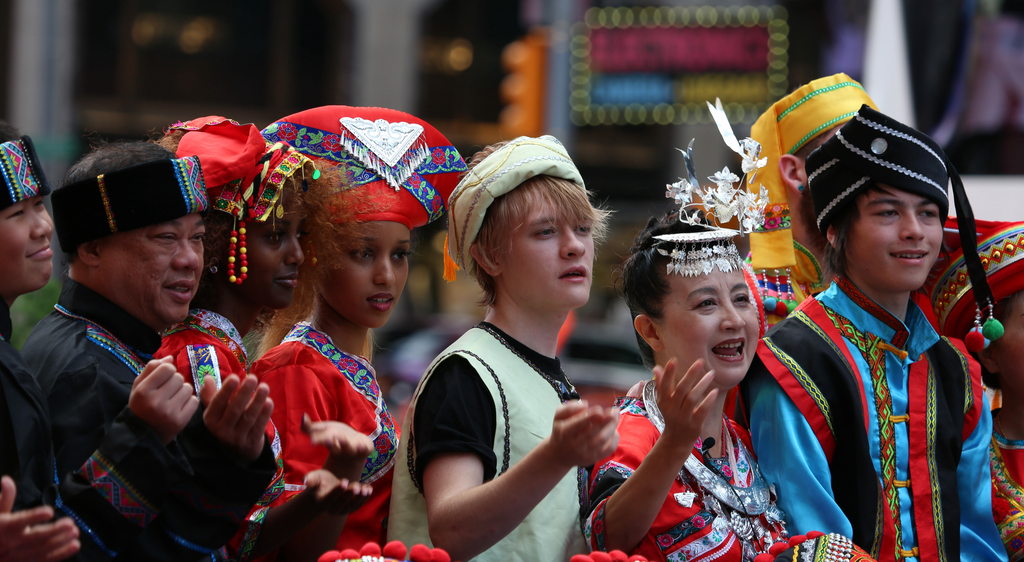
You hear Mandarin spoken by people from different backgrounds. You see how the language adapts to describe things that do not exist in standard textbooks. You learn that Chinese is not one thing — it is many things, shaped by the people who speak it.
That understanding changes how you learn. You stop thinking of Chinese as a subject to be mastered. You start thinking of it as a living language, with roots in places like this.
For anyone who wants to learn Mandarin in Kunming in a way that feels connected to real life, the Nationalities Village is one of the best places to spend an afternoon.
The Yunnan Nationalities Village will not replace your textbook. It will not teach you grammar or drill your tones. But it will do something equally important: it will make the language feel real.
You will walk away with new words, new memories, and a new understanding of what Chinese can be. And the next time you sit down to study, you will remember why you started.
Thank you so much for contacting Sojourn Abroad! We can’t wait to welcome you in China!