


We will get back to you within 1 working day!
Thank you so much for contacting Sojourn Abroad! We can’t wait to welcome you in China!
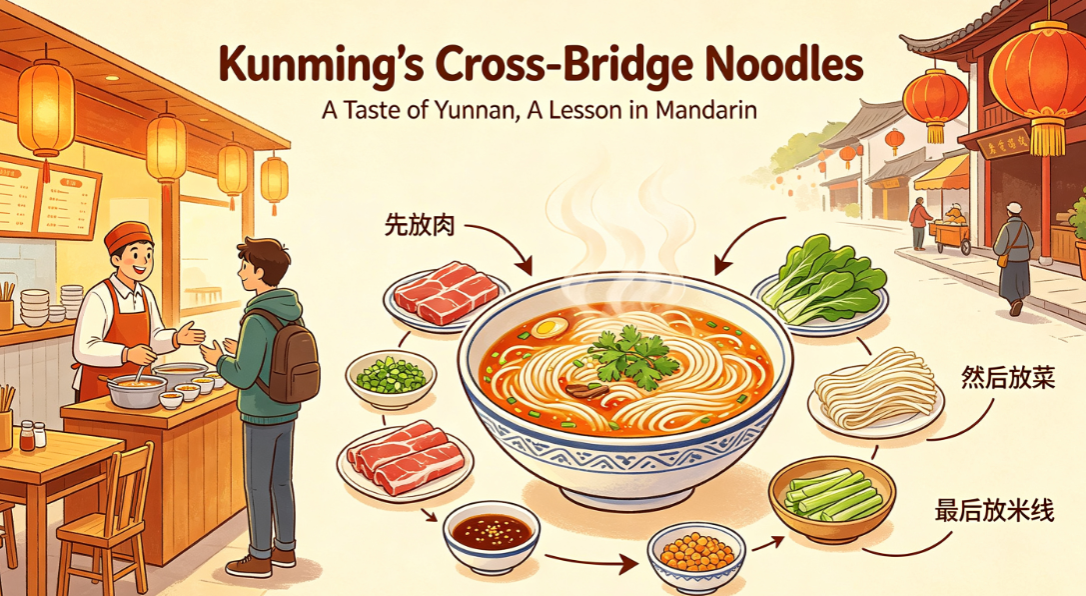
Most Chinese textbooks give you sentences you’ll never use. Cross-Bridge Noodles gives you language you actually need. From the moment you walk into a Kunming noodle shop, you’re forced to speak, listen, and understand. This article explores why this iconic dish is not just Kunming’s culinary pride — it’s a real-world Mandarin lesson hiding in plain sight.
Think about the Chinese you learn in a textbook.
You memorize words for “airport,” “library,” and “bank.” But when was the last time you needed to say “I am going to the library to borrow a book” in a real conversation?
Most textbooks teach you language you don’t use. They prepare you for a world that doesn’t exist.
Cross-Bridge Noodles — Kunming’s most famous dish — does the opposite. It teaches you language you actually need. Not because it’s designed to. But because you can’t eat without using it.
Cross-Bridge Noodles is not a quiet meal. It’s an interaction.
The waiter doesn’t just bring you food. They bring you choices. Questions. A chance to speak.
You have to understand:
And you have to answer.
If you don’t, you don’t eat. That is real motivation.
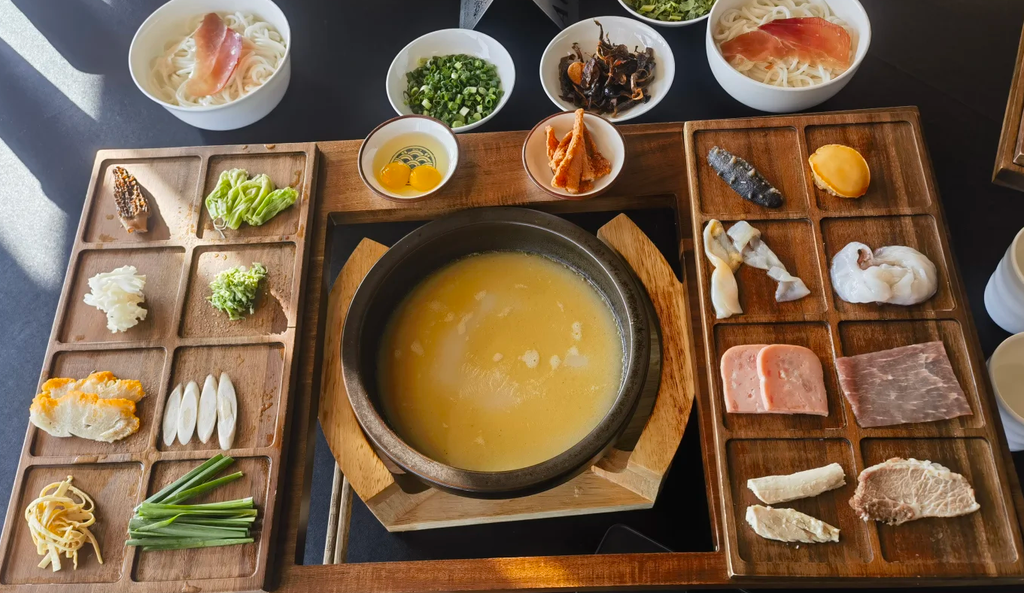
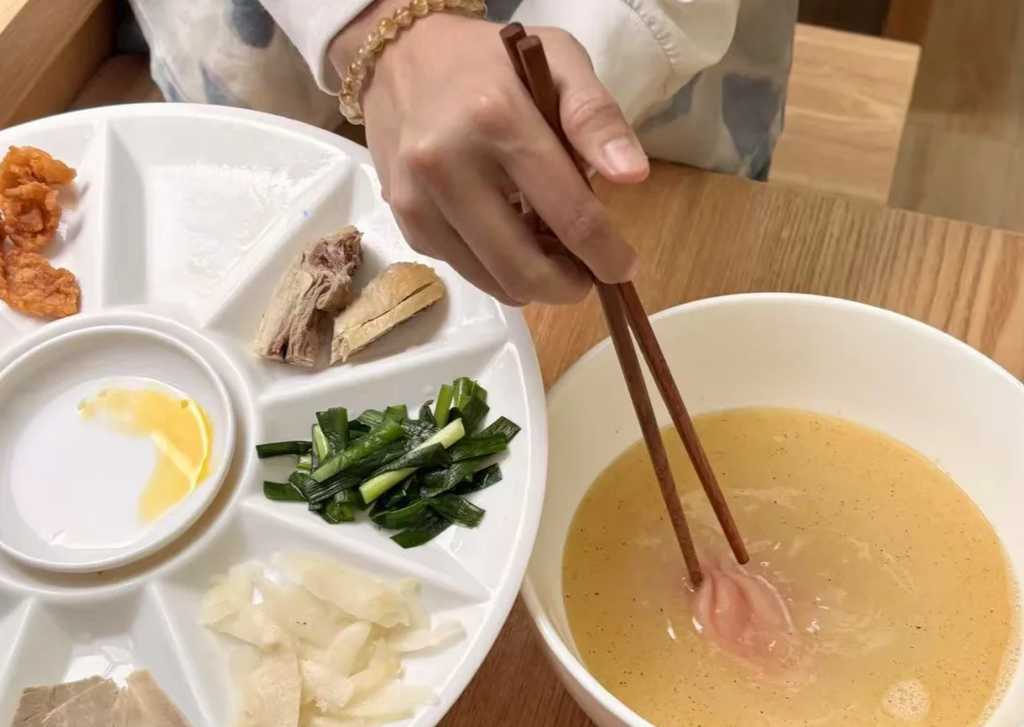
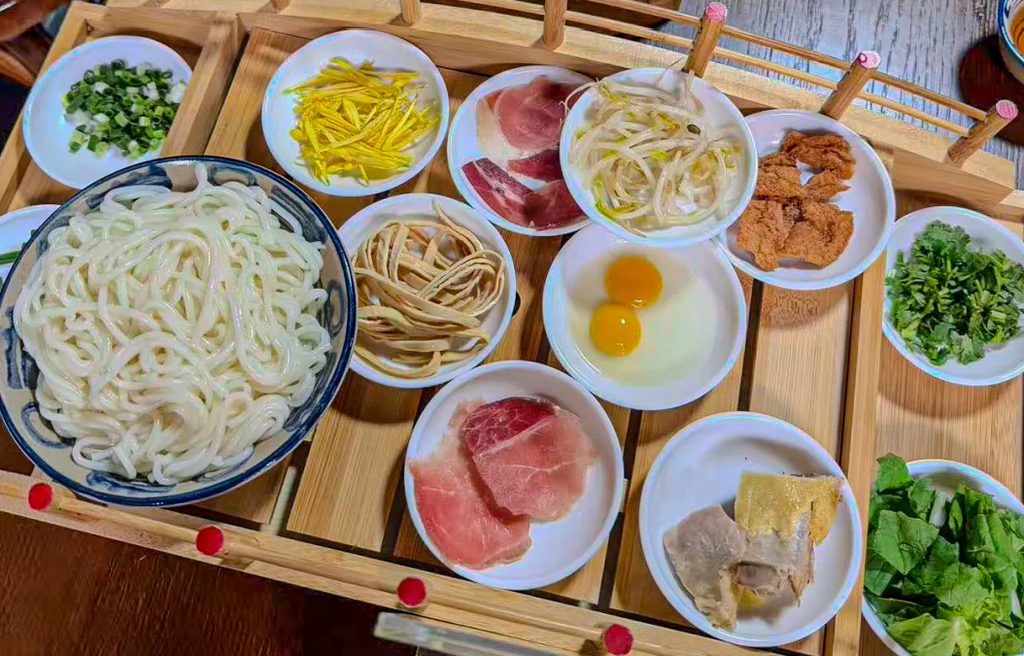
The dish has a strict order: first the meat, then the vegetables, then the noodles. You can’t just throw everything in at once.
This order is not just about cooking. It’s about how Chinese sentences work.
When you order, the waiter might tell you:
“Xiān fàng ròu, rán hòu fàng cài, zuì hòu fàng mǐ xiàn.”
That one sentence teaches you a pattern you’ll use every day: Xiān… rán hòu… zuì hòu… (先……然后……最后……). It’s how you describe a process. How you explain an order. How you tell a story.
Most textbooks teach you this pattern. But they don’t force you to use it. Cross-Bridge Noodles does.
Some vocabulary stays in your head. Some goes out the other ear.
The words you learn while eating Cross-Bridge Noodles stay.
Why? Because you need them. Because you can taste them.
You learn:
These are not random characters from a list. They’re survival words. Words connected to an experience. Words that stick.
Cross-Bridge Noodles teaches you patience.
You can’t rush it. The broth is too hot. The meat needs time to cook. The flavors need to blend.
Learning Chinese is exactly the same.
You can’t cram 500 characters in a week and expect to remember them. You can’t skip the basics and jump to fluency. You have to follow the order. Give it time. Trust the process.
The dish doesn’t teach you anything new about patience. It just reminds you of something you already know: the best things take time.

Cross-Bridge Noodles works so well for learners because it checks every box:
This is what Chinese learning should feel like. Not a test. Not a performance. Just real life — with a bowl of noodles at the center.
Cross-Bridge Noodles won’t teach you everything. But it will teach you something textbooks can’t: how to use Chinese when it matters.
In Kunming, this dish is everywhere. Every bowl is a chance to practice. Every order is a small victory. And every meal reminds you that the best way to learn Chinese is not to study it — it’s to live it.
Thank you so much for contacting Sojourn Abroad! We can’t wait to welcome you in China!