


We will get back to you within 1 working day!
Thank you so much for contacting Sojourn Abroad! We can’t wait to welcome you in China!

Imagine walking into a classroom where the walls are made of flowering trees, your textbook is a menu at a noodle stall, and your homework is bargaining for a bunch of bananas at the morning market. That classroom exists. It’s called Kunming.
Ask most people where to learn Chinese, and they will name the usual suspects: Beijing, Shanghai, Guangzhou. Good schools, yes. But the classroom there is mostly a room with four walls. You study vocabulary, then step outside and hear something completely different—dialects, slang, people speaking so fast you catch nothing. The gap between what you learn and what you hear can feel impossible to bridge.
Kunming closes that gap. Here, people speak Mandarin the way it’s written—clearly, without the overwhelming slur of northern dialects or the rapid-fire delivery of the coast. If you learn a word in the morning, you will hear it used correctly by noon. The city doesn’t just give you lessons; it reinforces them, naturally.

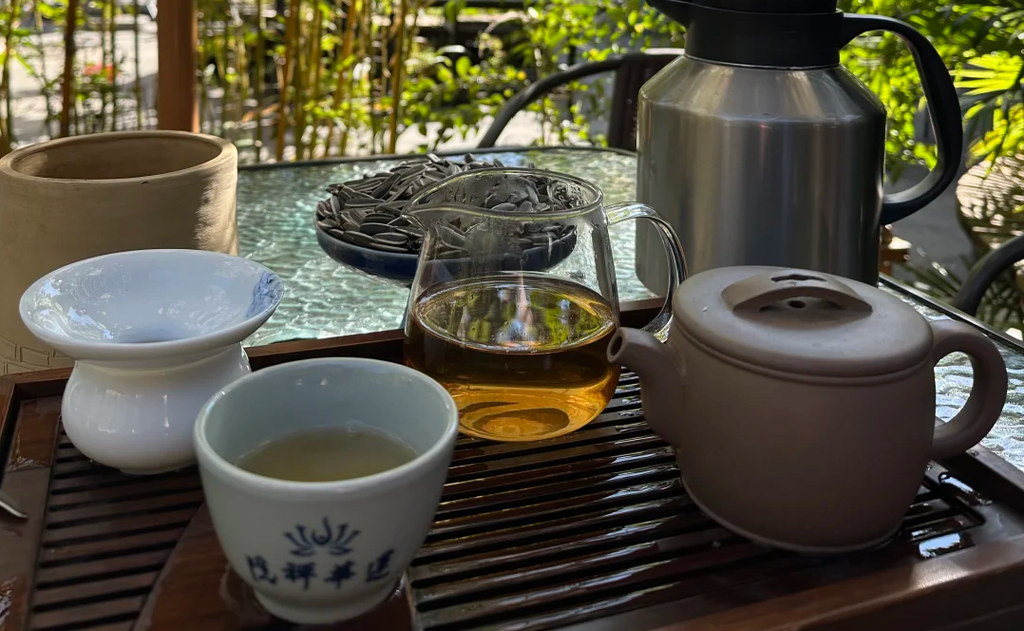
Your first class in Kunming might not be in a school. It might be a tea house in the old town, where the owner sits across from you, pouring pu’er into small cups and explaining the difference between raw and aged. You will learn vocabulary that no textbook would think to include: bitter, sweet, aftertaste, the third steep is the best one. And when you repeat the words back, the owner nods, corrects your tone gently, and teaches you something else. This isn’t a staged cultural performance. This is a conversation.
Your second class is the market. In Beijing, you might point and pay. In Shanghai, the vendor might switch to English the moment you hesitate. But in Kunming, the morning market is where language goes to be tested. You need numbers, you need weights, you need to know how to say too expensive without sounding rude. The vendor will not help you with English—she may not speak it. Instead, she will wait, smile, and repeat the price until you get the tone right. You will leave with fruit, yes. But you will also leave with a small victory: you just held a real conversation in Chinese.

Your third class is Green Lake Park. On any morning, you will find elderly couples practicing tai chi, retired musicians playing the erhu, and groups of locals singing folk songs. They will invite you to join. Not out of politeness—because they genuinely want to. You will stand among them, clap along, and try to sing. You will make mistakes. They will laugh, not at you, but with you. And in that moment, Chinese ceases to be a language you study. It becomes a language you do.

Kunming is home to 26 ethnic minority groups. You don’t need a tour guide to meet them—just follow the calendar. One weekend, it’s a Yi village where women embroider traditional patterns and explain their history in Mandarin. The next, it’s the Dai Water Splashing Festival, where you are soaked, laughing, shouting blessings in Chinese. These are not tourist shows. They are real celebrations, and you are not an observer. You are a participant.

Of course, you could wander Kunming on your own and pick things up here and there. But if you want real progress—the kind where you wake up one day and realize you’re no longer translating in your head—a little structure helps. Not to replace the city, but to give you a foundation so that every interaction becomes a lesson.
There are programs in Kunming that understand this. Sojourn Abroad, for instance, runs small-group courses for people who want to learn without being stuck in a classroom all day. You build the groundwork in the morning, and then you walk out into the city and test it.
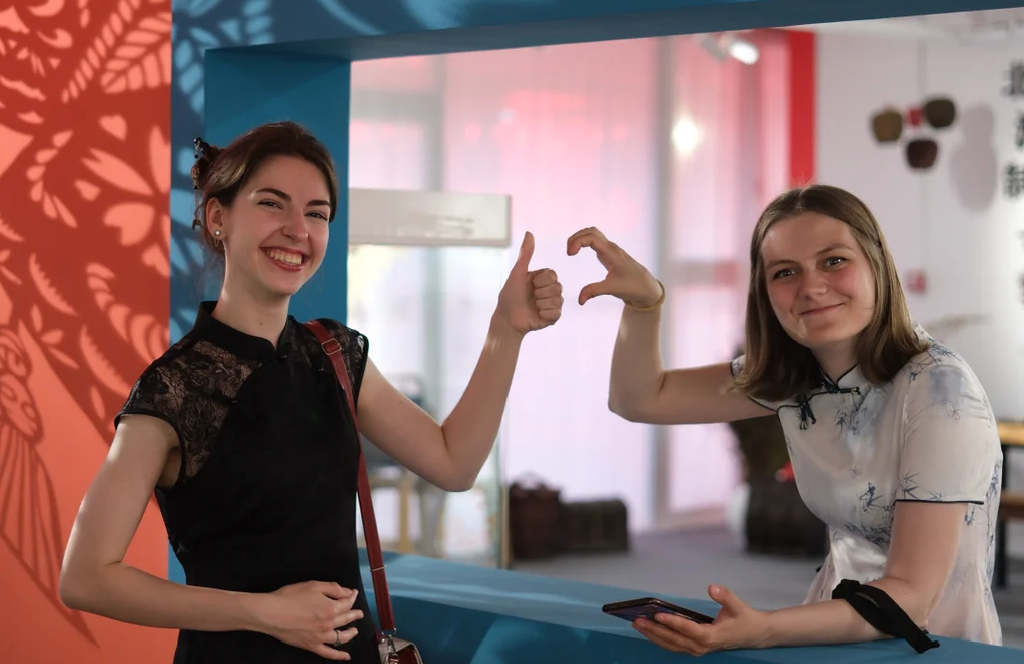
The thing about learning a language in Kunming is that you don’t just learn words. You learn a way of being. You learn to slow down. You learn to listen. You learn that a mistake in tone is not a failure—it’s an invitation for someone to correct you gently, and in doing so, to connect.
And long after you leave, the city stays with you. Not in the certificates or the test scores. But in the taste of pu’er, the echo of erhu at dawn, the warmth of a stranger who helped you find the right word.
If you’re ready to trade the classroom for a city, Kunming is waiting. And if you want a map before you start walking, Sojourn Abroad is there to hand you one.
Thank you so much for contacting Sojourn Abroad! We can’t wait to welcome you in China!