


We will get back to you within 1 working day!
Thank you so much for contacting Sojourn Abroad! We can’t wait to welcome you in China!
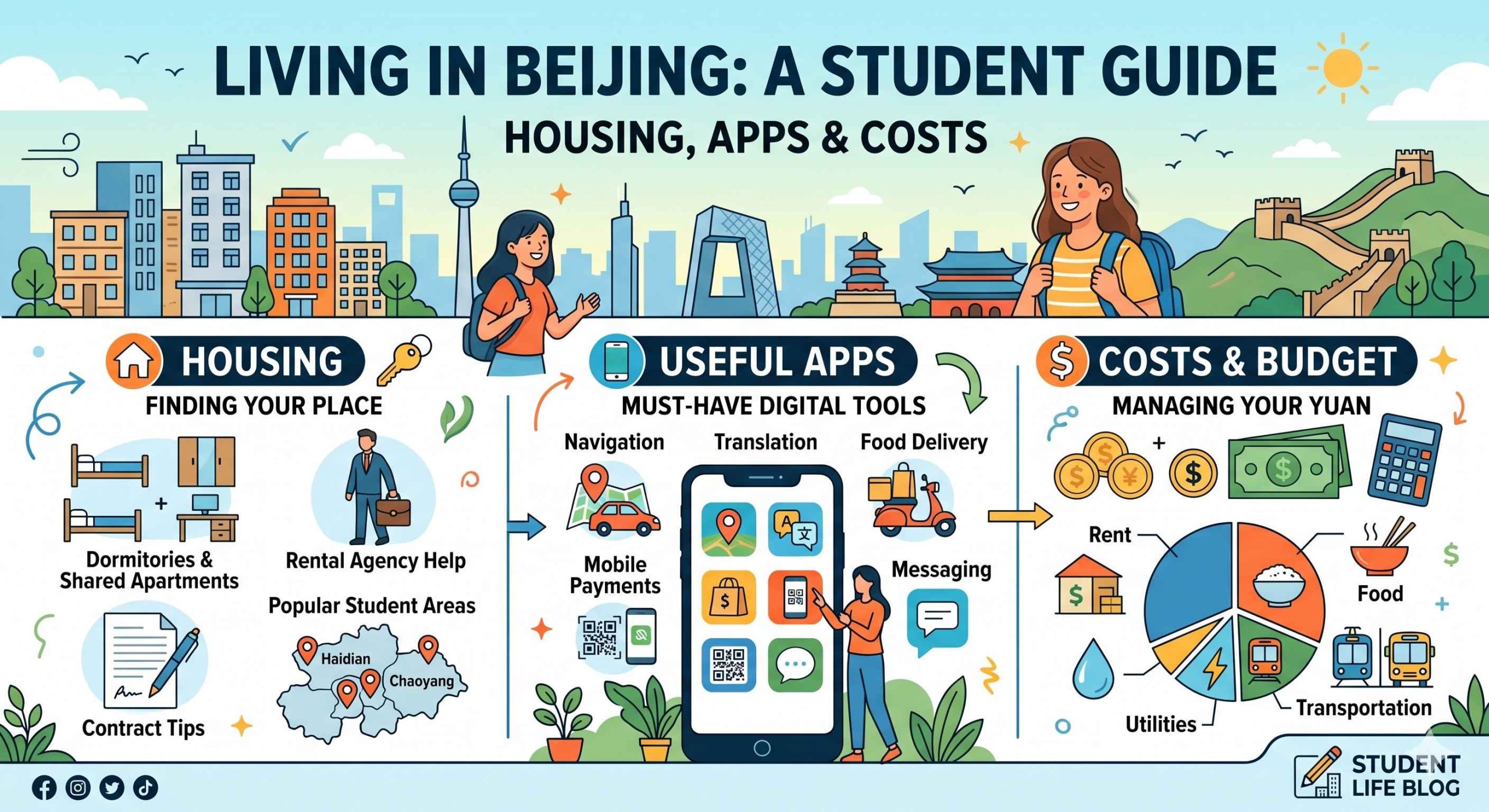
Deciding to come to Beijing to learn Chinese is an exciting choice. As the capital of China, Beijing is home to the Forbidden City, the Great Wall, hutongs, and Peking duck. But more than that, it is a giant classroom where you can immerse yourself in standard Mandarin every single day. However, before you start your language adventure, there is a practical question you need to answer first: where will you live, and how will you manage daily life here?
For international students, settling down in Beijing can seem daunting at first. But with the right approach and the right tools, the whole process can be smooth and even enjoyable. This guide will walk you through student housing options, must-have mobile apps, and monthly living costs in Beijing, helping you find your own rhythm in this ancient capital.
Your accommodation is one of the most important parts of your student life. A good place to live not only helps you rest well but also directly affects your learning efficiency and language immersion experience. Here are four common housing options for international students in Beijing.
Homestay is best for students who want to improve their spoken Chinese quickly and gain a deep understanding of Chinese family culture. The biggest advantage is the immersive language environment. You will speak Chinese with family members every day, and meals are usually included. The only thing to keep in mind is that you need to respect the family’s daily habits, and the commute to school might be a bit longer.
Apartment living is ideal for students who value independence and like to cook for themselves. Apartments offer a high degree of freedom, allowing you to live at your own pace. Sharing an apartment with classmates can also help lower costs. On the downside, you will need to handle the rental contract, utility bills, and internet setup yourself. Most landlords also require a deposit plus three months’ rent upfront.
Hotel accommodation works best for short-term study (2 to 4 weeks) or as a temporary solution when you first arrive in Beijing. Hotels require no deposit, offer full services, and are usually conveniently located. However, long-term hotel living can be very expensive and lacks a home-like atmosphere.
Hostel is suitable for backpacker-type students on an extremely tight budget or for very short-term stays. Hostels are cheap and give you a chance to meet other international travelers. But privacy is limited, the environment can be noisy, and it is not ideal for students who need a quiet place to study.
Here is some good news. You do not have to face these complex choices alone. Sojourn Abroad offers all four accommodation options mentioned above for its Beijing program students: Homestay, Apartment, Hotel, and Hostel. You can choose flexively based on your budget and learning needs. Whether you prefer the warmth of a homestay or the independence of an apartment, Sojourn Abroad takes care of the hassle of finding a place, signing contracts, and paying deposits. You can simply move in and start learning as soon as you arrive in Beijing.
If you prefer to find an apartment or book a hotel on your own, here are some recommended platforms:
For apartment hunting, the most trusted platform in China is Beike(贝壳)/ Lianjia(链家), known for its 100% real listings and reliable agent services. For a more foreigner-friendly experience, Ziroom offers beautifully furnished apartments with English customer service, online lease signing, and integrated services like cleaning and repairs. Both have mobile apps and mini-programs.
For hotel booking, international students can use Trip.com (or Ctrip) , which has an English interface and accepts international credit cards. For domestic platforms, Meituan(美团) and Dianping(大众点评) offer a wide selection of hotels at competitive prices, though their interfaces are in Chinese. Beijing has also launched “GO BEIJING” , a one-stop service platform for international visitors that supports hotel booking, ride-hailing, and ticket purchases in 16 languages, making it an excellent tool for newcomers.
One important thing to keep in mind: most of these apps and mini-programs require a Chinese phone number to register. You will not be able to sign up using an international number. This is a common challenge for newcomers who have just arrived in Beijing. The moment you arrive, Sojourn Abroad can take you to get a Chinese SIM card and phone number right away. With your new Chinese number, you can register for all the essential apps. This small but crucial step unlocks the entire digital ecosystem of daily life in Beijing. Sojourn Abroad makes sure you are connected and ready to go from day one, so you never feel stuck or lost.




In Beijing, your smartphone is your best assistant. The following five apps are essential for every international student.
WeChat(微信) is far more than just a messaging app. It is China’s universal pass. You can use it to pay for things, book taxis, order food delivery, schedule doctor appointments, and pay utility bills. Almost every aspect of daily life can be handled within WeChat. Be sure to link an international credit card or set up WeChat Pay.
AGaode Map(高德地图) is great for navigation. It does more than just show you directions. It provides real-time bus and subway schedules, estimated taxi fares, and can even help you find nearby restaurants and convenience stores.
Meituan (美团) are food delivery apps. When you are too tired to go out or too focused on studying, use these apps to order food. From stir-fried dishes to coffee, from fruit to medicine, everything can arrive at your doorstep in about 30 minutes. This is also a great opportunity to practice your Chinese reading skills since menus and user reviews are all in Chinese.
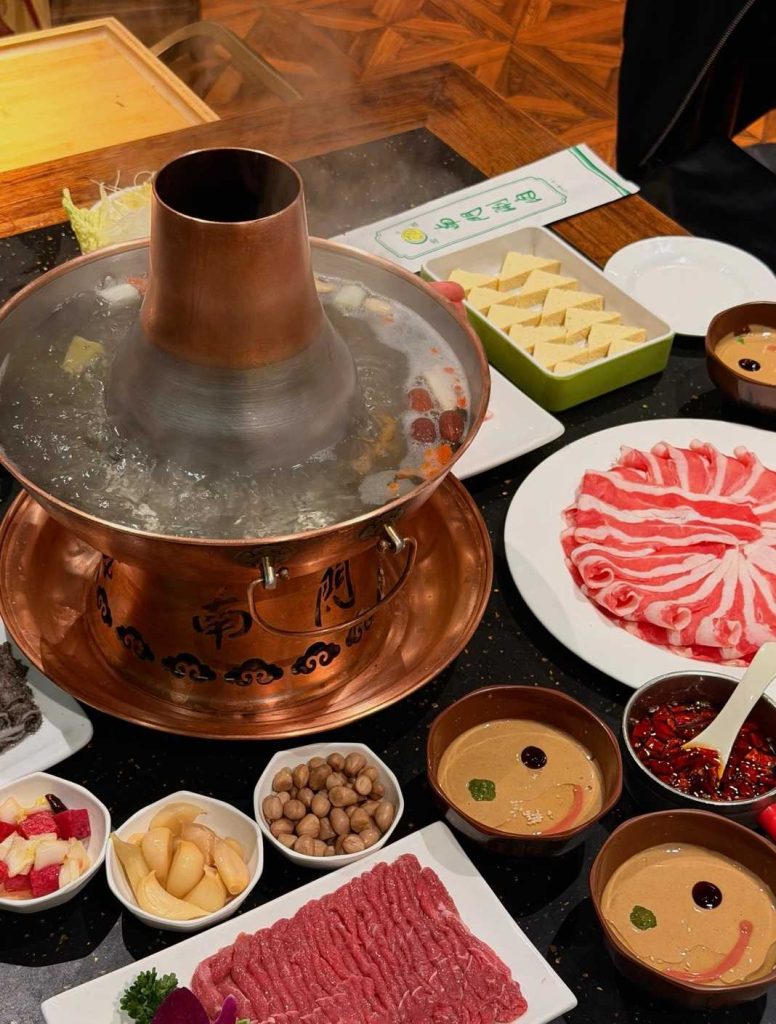
Dianping(大众点评) helps you find good local restaurants and fun activities. Want to know which hotpot place offers the best value for students? Dianping has millions of real user reviews, which are far more reliable than any travel guide.
DiDi(滴滴) is China’s version of Uber. Enter your destination, and a car will arrive within minutes. Remember to type your address in Chinese. This is actually a very practical way to practice character input.
Once you master these apps, you can live in Beijing just like a local. And every interface, every user review, and every short conversation with a delivery driver becomes a real-life Chinese practice opportunity.
Of course, surviving and thriving in China requires more than just a handful of apps. To help you navigate everything from high-speed train tickets to video calls with friends back home, we have created a complete 2026 expat guide. Continue reading here: Living in China: 8 Essential Apps You Need to Survive (2026 Expat Guide).


Compared to cities like Chengdu or Kunming, Beijing is indeed more expensive. But with careful planning, international students can live a full and comfortable life without overspending. Here is a rough breakdown of monthly expenses for a student with a moderate budget.
Housing (shared apartment or student apartment) typically costs between440 and 881 USD per month. Food, including a mix of campus dining, cooking for yourself, and eating out occasionally, comes to about 208 to 347 USD. Transportation, mainly subway, bus, and the occasional taxi, costs around 28 to 56 USD. A mobile phone plan plus home internet is about 14 to 28 USD. Entertainment, shopping, and other miscellaneous expenses add another70 to 139 USD.
In total, you should expect to spend between approximately 736 to 1,403 USD per month.
If you choose a homestay, meals are often included, which significantly reduces your food expenses. Also, remember to bring your student ID card. Many tourist attractions in Beijing offer half-price tickets for students, so take full advantage of that.
Want to know exactly how to keep your costs even lower while still getting the most out of your time in Beijing? We have covered everything from finding cheap eats to scoring student discounts on classes and travel. Continue reading here: Is Beijing Expensive? How to Study Mandarin on a Budget.


Finding a place to live, installing the right apps, and calculating your budget – these are all about survival. Real living means using every day in Beijing to learn, experience, and grow.
This is exactly why the Sojourn Abroad Beijing program is about much more than just teaching Chinese. In addition to 15 high-quality classes per week in small groups of no more than 10 students, Sojourn Abroad turns the entire city of Beijing into your extended classroom. With class sizes capped at 10, every student gets plenty of speaking practice and individual attention from the teacher.
The program costs as low as USD $230 per week. Compared to arranging housing, hiring private tutors, and booking tours on your own, this price is incredibly cost-effective. It includes classes, accommodation support, and cultural activities.
Sojourn Abroad also provides long-term student visa support for eligible students. This allows you to study for anywhere from 2 weeks to 52 weeks without having to leave the country frequently to renew your visa.
The cultural activities are another highlight. Sojourn Abroad regularly organizes traditional festival events. During the Spring Festival, students gather to make dumplings and write Spring Festival couplets. For the Mid-Autumn Festival, you might make mooncakes. These are not quick tourist stopovers. They are hands-on cultural experiences where you actively participate and communicate in Chinese.
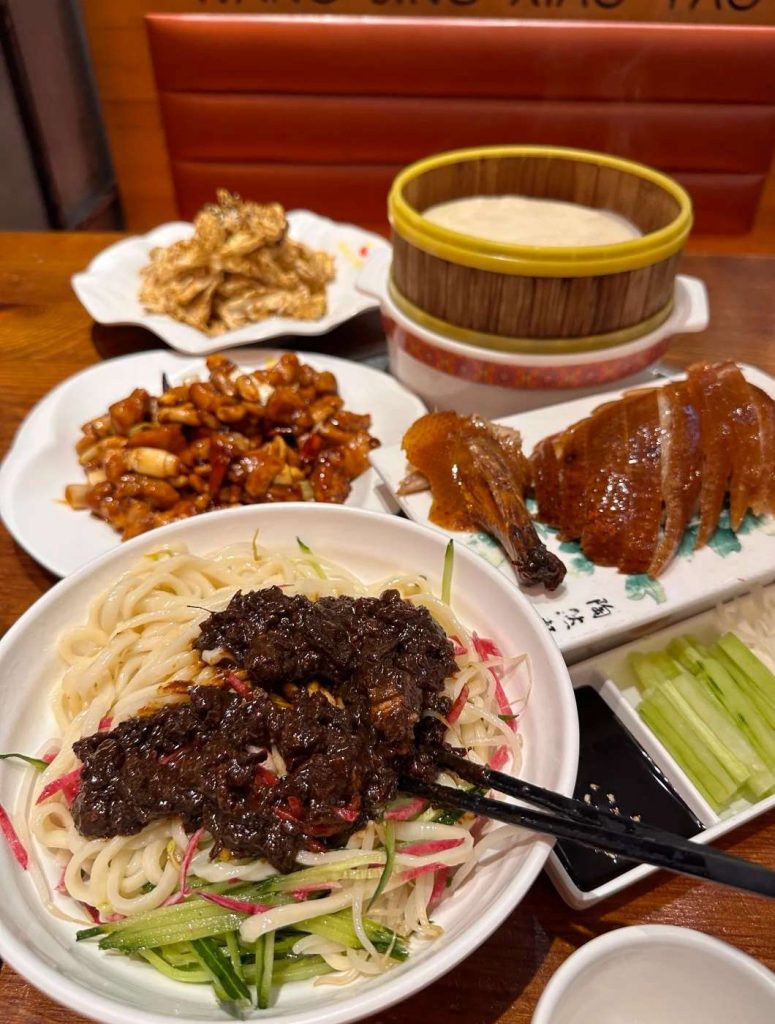
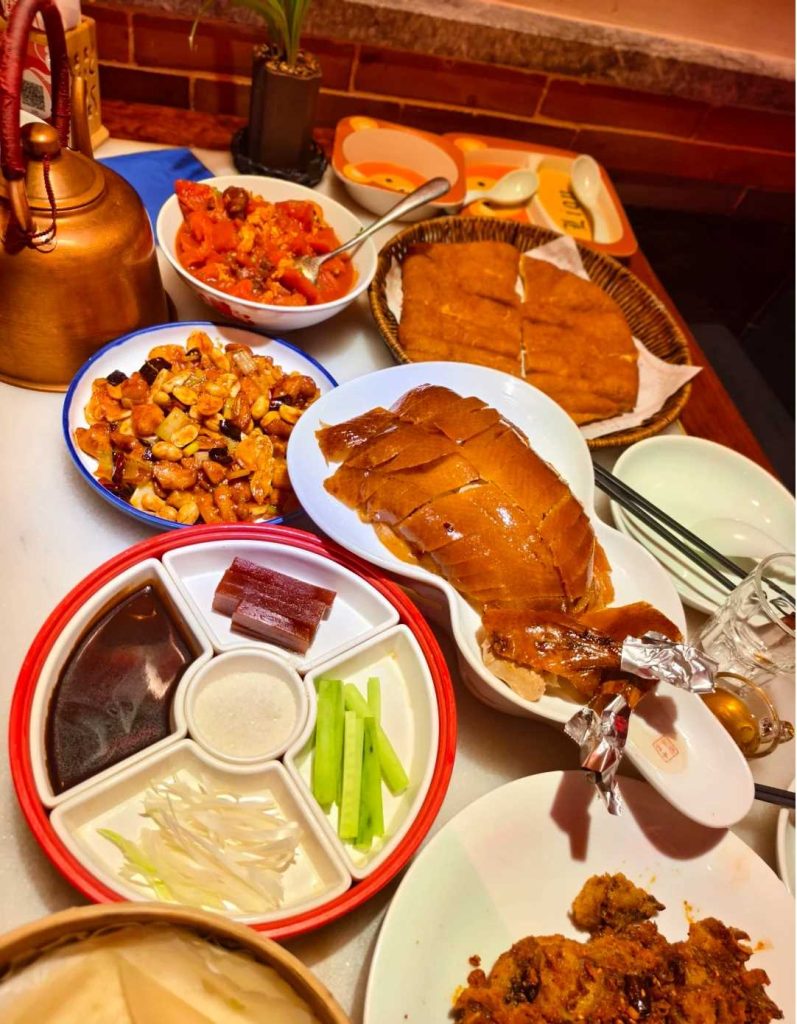
Beyond festivals, the program takes students to visit famous Beijing landmarks such as the Forbidden City, the Temple of Heaven, the Summer Palace, and the Great Wall. At the same time, you will be introduced to local specialty snacks that you would never find in a travel guide: douzhi (fermented mung bean milk) with jiaoquan (crispy rings), zhajiangmian (noodles with fried sauce), and mending roubing (Men Ding style meat patties). Eating, learning, and chatting together – this is the kind of lively Chinese you cannot learn from a textbook.
But a great program alone is not enough. Total immersion requires a mindset and a set of daily habits that surround you with Mandarin from morning to night. Want to learn how to turn every bus ride, every market visit, and every conversation with your landlord into a Chinese lesson? Continue reading here: How to Find Total Mandarin Immersion in Beijing.
First, get a transportation card. The subway and buses are the most reliable ways to get around Beijing. Getting a Yikatong card will also give you a small discount on every ride.
Second, download a VPN before you arrive. If you need to use Google, Instagram, WhatsApp, or other overseas services, make sure you have a reliable VPN ready.
Third, bring a mask and consider getting an air purifier. Beijing’s air quality has improved significantly in recent years, but there are still occasional hazy days. If you have respiratory sensitivities, it is worth being prepared.
Fourth, step out of the English bubble. Do not just hang out with other international students from your class. Go to the local market to buy vegetables. Chat with the elderly uncle sitting at the neighborhood gate. Order your food in Chinese at restaurants. These small acts of courage will lead to huge progress in your language skills.
Living in Beijing is not always easy, but it is absolutely worth it. The city is noisy, crowded, and sometimes exhausting. But it is also full of opportunities, warmth, and endless learning material. From the vendor calls in the hutongs to the subway announcement tones, from the Chinese menus on food delivery apps to the bowl of dumplings handed to you by a neighbor during Spring Festival – the Chinese language is everywhere.
And with the support of Sojourn Abroad, your Beijing journey becomes much smoother. Whether you plan to study for 2 weeks or a full year, whether you prefer the warmth of a homestay or the freedom of an apartment, Sojourn Abroad offers tailored solutions for you. At prices as low as USD $230 per week, with small group classes of no more than 10 students, long-term student visa support, and cultural activities that truly immerse you in China – making dumplings, writing Spring Festival couplets, visiting landmarks, tasting local snacks – this is not just a Chinese language course. This is a life experience you will remember forever.
Your Beijing story starts with finding a cozy little home. And your language breakthrough will begin with your first class at Sojourn Abroad.
Ready to come to Beijing? The city, and your Chinese dream, are both waiting for you.
By Karina
Course Consultant at Sojourn Abroad
Helping you navigate your study abroad journey.
Thank you so much for contacting Sojourn Abroad! We can’t wait to welcome you in China!