


We will get back to you within 1 working day!
Thank you so much for contacting Sojourn Abroad! We can’t wait to welcome you in China!
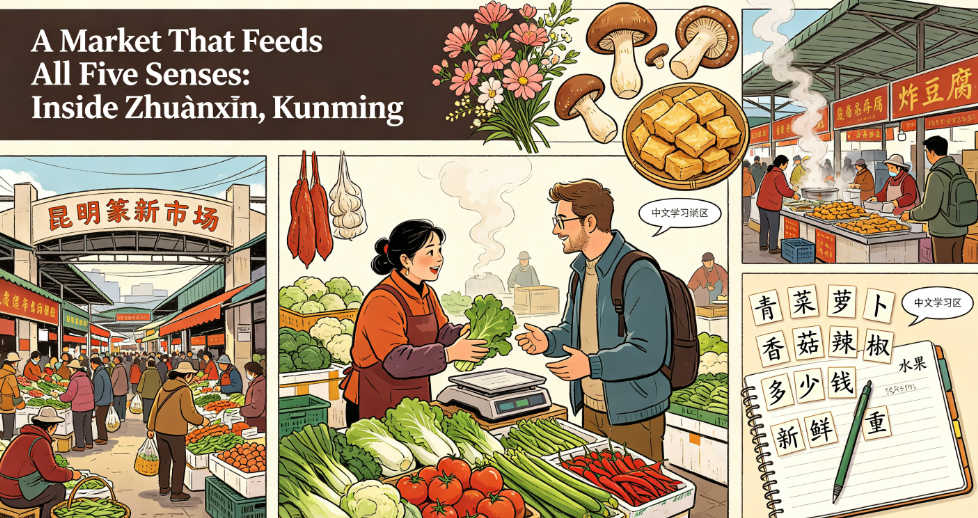
Zhuànxīn Market is not just a place to buy vegetables. It is a full-body experience — a place where sight, sound, smell, taste, and touch all come together. For language learners, it is also one of the best classrooms in Kunming. This article takes you inside the market, explores what each sense teaches you, and shows how small group classes in Kunming can turn a simple shopping trip into a real Chinese lesson.
Most Chinese learners spend their days in classrooms. Textbooks, whiteboards, listening exercises. That works — up to a point.
But some of the most useful practice happens somewhere else. It happens in a market, standing in front of a pile of mushrooms you cannot name, trying to ask how much they cost. It happens when a vendor speaks to you at natural speed and you have to understand.
For anyone who wants to learn Chinese in Kunming, Zhuànxīn Market is the kind of place that turns study into real life.
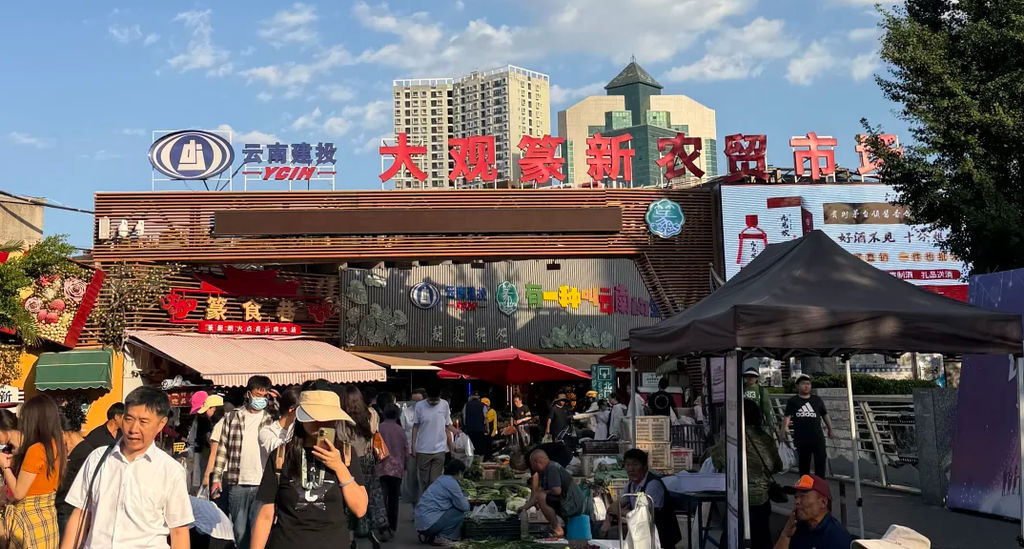
The first thing that hits you at Zhuànxīn Market is the visual overload.
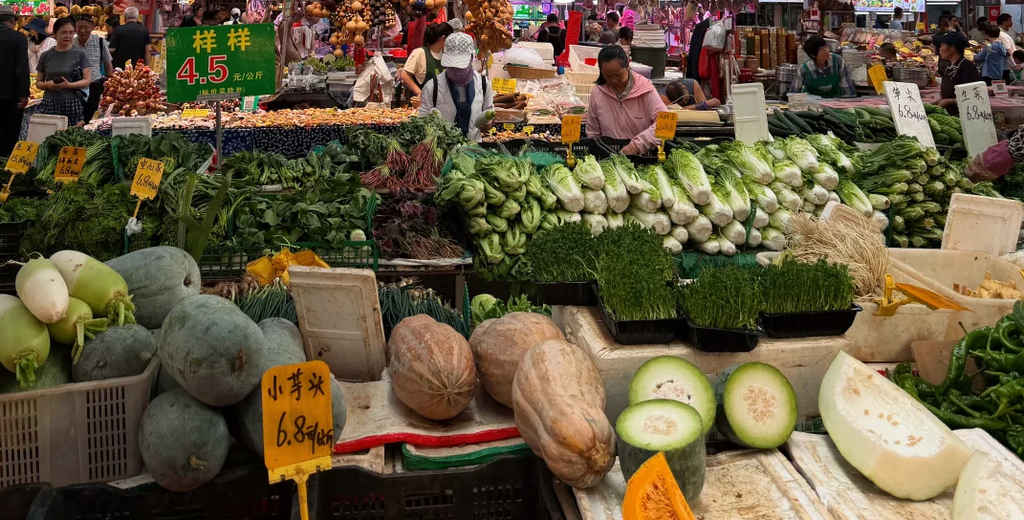
Mountains of vegetables in every shade of green. Baskets of red chili peppers. Piles of golden fried tofu. Rows of dried mushrooms, dark and wrinkled. Vendors arranging fruit into neat pyramids. Shoppers weaving between stalls with bags in hand.
And everywhere, characters. Signs above stalls. Price tags. Labels on jars and packages. For a language learner, this is a reading exercise disguised as a market.
You learn the names of vegetables: qīngcài (青菜 — greens), luóbo (萝卜 — radish), xiānggū (香菇 — shiitake mushrooms). You learn the names of fruits: píngguǒ (苹果 — apple), xiāngjiāo (香蕉 — banana), shuǐguǒ (水果 — fruit). You learn to recognize the character for “fresh” — xiān (鲜) — on signs everywhere.
For anyone taking small group Chinese classes in Kunming, this is the kind of vocabulary that actually sticks — because you are seeing it, not just memorizing it.
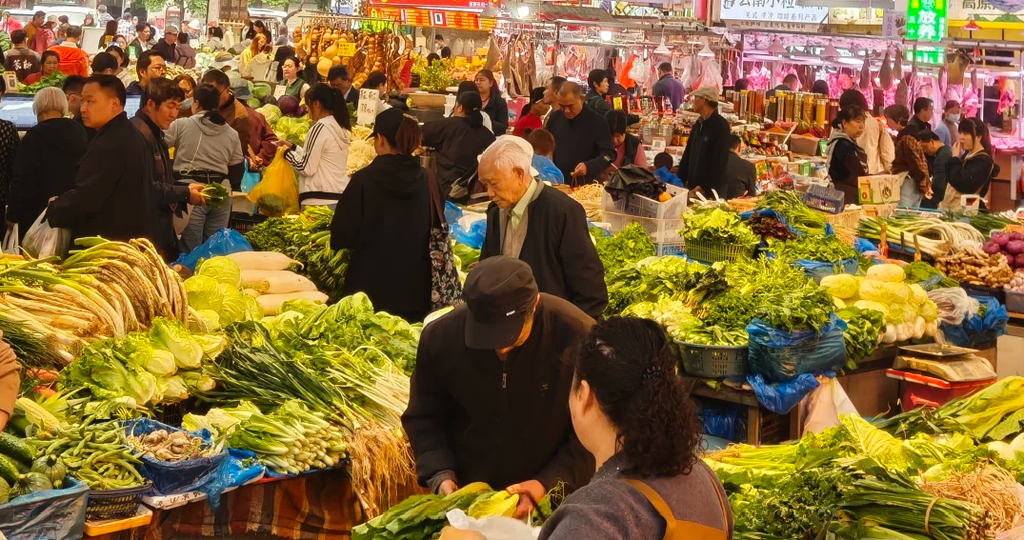
Zhuànxīn is loud. Vendors call out prices. Customers bargain. Bags rustle. Coins clink. Somewhere nearby, someone is laughing.
At first, it feels overwhelming. You cannot catch every word. You cannot follow every conversation.
But that is the point.
Listening in a market trains your ear in a way that classroom audio never can. You learn to filter out background noise. You learn to catch keywords. You learn to understand Mandarin even when it is fast, messy, and surrounded by distraction.
Over time, something shifts. You start catching more. You start understanding the rhythm of the language. You start feeling less lost.
For students who study Chinese in Kunming, this daily listening practice is one of the city’s quiet advantages.
Zhuànxīn smells like Yunnan.
The earthy scent of wild mushrooms. The sharp aroma of dried chili. The sweetness of fresh flowers. The tang of fermented vegetables. The fragrance of herbs you have never seen before.
Smell is memory. And memory is how language sticks. When you learn the word for “mushroom” while actually smelling it, when you learn “chili” while breathing in its sharpness — those words do not fade. They stay with you.
For anyone who wants to learn Mandarin in Kunming, the market is a sensory classroom that no textbook can replicate.
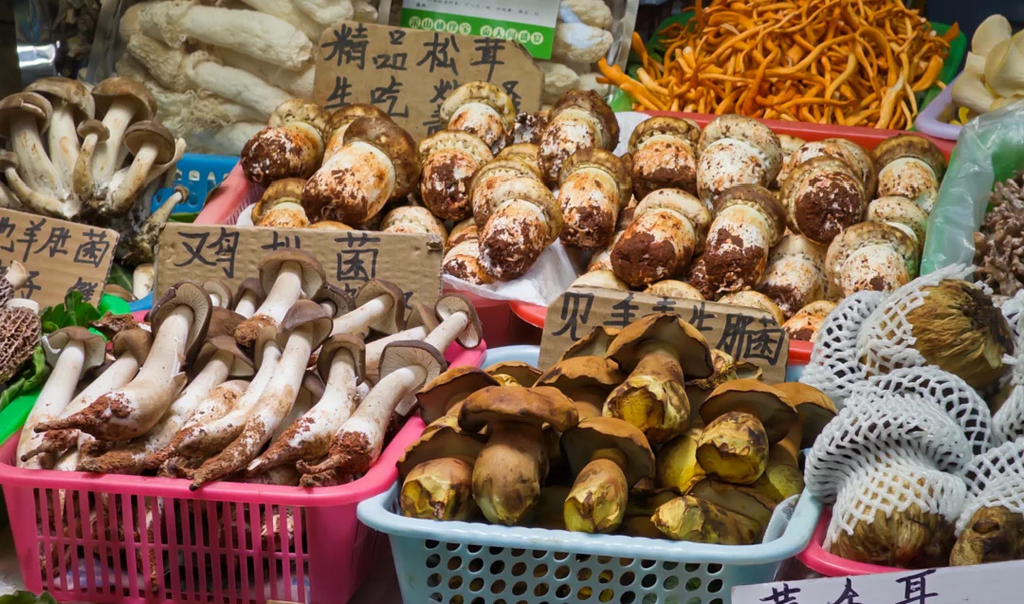
Zhuànxīn is not just a place to buy food. It is a place to eat.
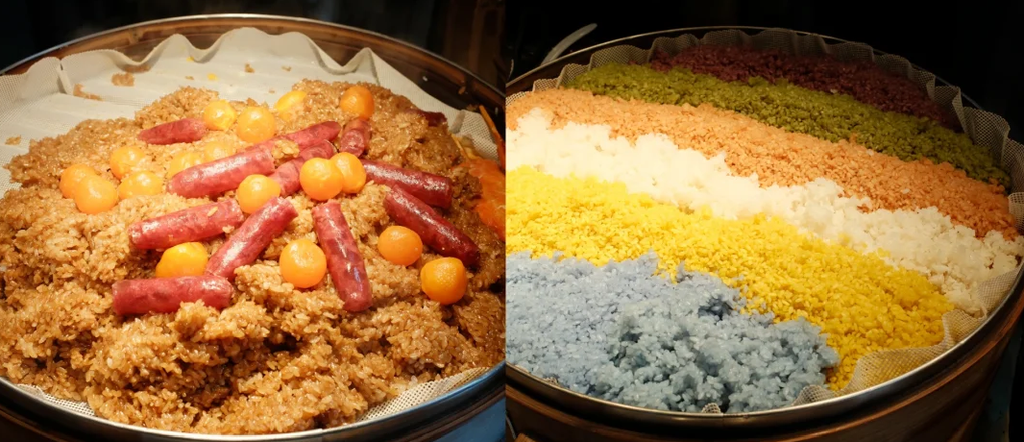
Vendors offer samples. There are steamed buns, fried dough, rice cakes, and pickled snacks. You can try a bite of something you have never seen before — and learn its name at the same time.
This is where vocabulary becomes physical. You taste something, you ask what it is, you learn the word, and you remember it because you can still taste it.
At Zhuànxīn, you do not just look and listen. You touch.
You pick up vegetables, feel their texture, and ask the vendor: zhè ge duō shǎo qián? (这个多少钱? — How much is this?). You hand over coins, count your change, and practice numbers without even thinking about it. You carry your bag, feel its weight, and learn the word for “heavy” — zhòng (重).
Touch grounds the language in physical reality. You are not just memorizing words — you are doing things with them.
Zhuànxīn is just one part of Kunming’s language-learning landscape.
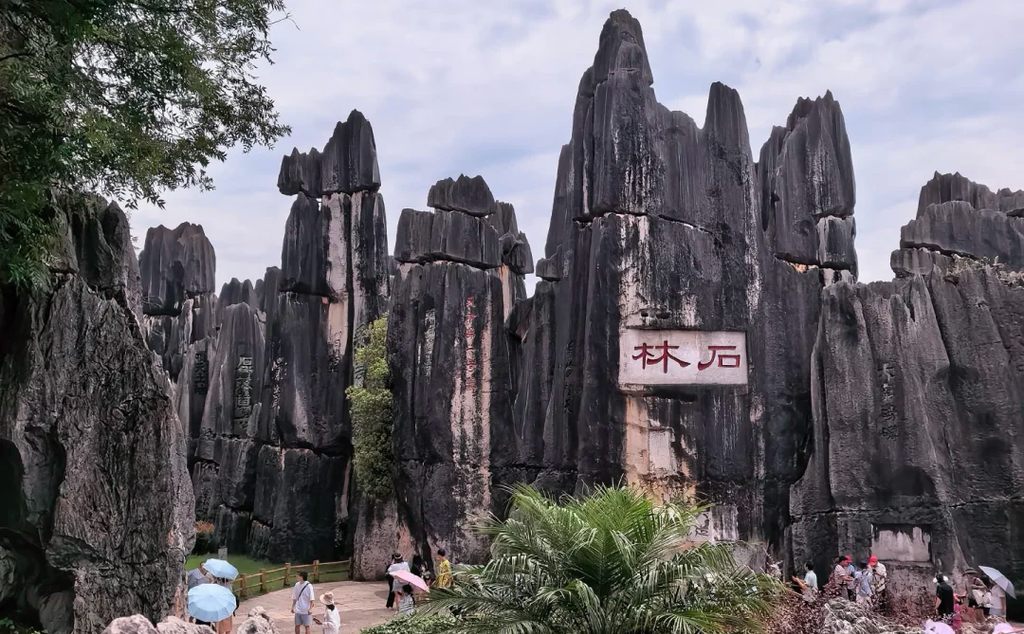
Nearby, you can walk to Green Lake Park (翠湖公园), where locals practice calligraphy and sing folk songs. You can visit Yuantong Temple (圆通寺), a 1,200-year-old Buddhist temple. You can explore Kunming Old Street (昆明老街), with its stone-paved paths and traditional wooden buildings. Or take a short trip to the Stone Forest (石林), a UNESCO World Heritage Site about an hour and a half away.
Each of these places offers new vocabulary, new conversations, and new contexts for practice.
For anyone who wants to pursue Chinese studies in Kunming, the city itself is the classroom.
Natural practice works best when it is supported by structured learning. That is where small group courses in Kunming come in.
In a small group, you prepare vocabulary before you go to the market. Your teacher gives you a list of ingredients, or practices the sentence patterns you will need for asking prices and bargaining. Then, when you go out, you have the tools to actually use them.
Afterward, you come back to class and debrief. You share what you heard, what you said, and where you got stuck. Your teacher corrects your mistakes and helps you improve for next time.
This cycle — prepare, practice, debrief — is what makes small group lessons in Kunming so effective. The classroom gives you the structure. The market gives you the experience. Together, they create real progress.

Zhuànxīn Market is not designed for language learners. It is designed for people who want to buy food, cook dinner, and live their lives.
But that is exactly why it works.
It offers what classrooms cannot: real conversations, real pressure, and real rewards. It lets you practice without feeling like you are studying. It lets you make mistakes without feeling judged. It lets you learn Chinese in the most natural way possible — by living it.
So the next time you are in Kunming, go to Zhuànxīn. Bring your appetite. Bring your curiosity. And bring your Chinese.
Thank you so much for contacting Sojourn Abroad! We can’t wait to welcome you in China!