


We will get back to you within 1 working day!
Thank you so much for contacting Sojourn Abroad! We can’t wait to welcome you in China!
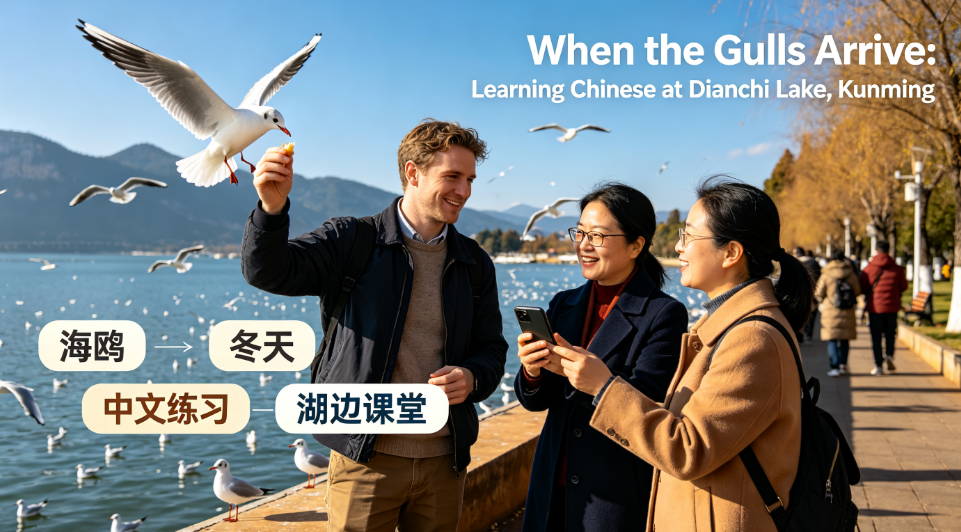
Every winter, tens of thousands of red-billed gulls migrate from Siberia to Kunming’s Dianchi Lake. For language learners, their arrival is more than a natural spectacle — it is a seasonal classroom. This article explores how the gulls, the lake, and the people who gather to feed them can turn a simple walk into a Chinese lesson. It also looks at how small group Chinese classes in Kunming can help learners make the most of this unique winter window.
Kunming is known as the Spring City, but winter brings something special. Starting in November, the red-billed gulls arrive. They come from Siberia, thousands of kilometers away, and they land on the shores of Dianchi Lake, Haigeng Park, and Green Lake.
Locals come to feed them. Tourists come to photograph them. And language learners — whether they realize it or not — come to practice.
For anyone who wants to study Chinese in Kunming, the gull season is one of the best times of year to be outside, listening, speaking, and learning.
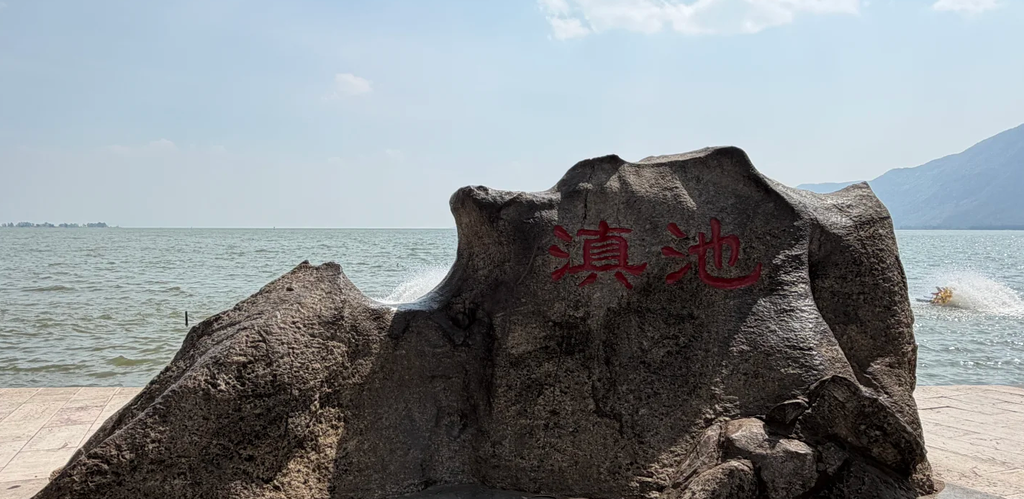
The gulls are more than a pretty sight. They are a conversation starter.
When you stand by the lake with a bag of bread, someone will almost certainly talk to you. It might be an elderly man who has been feeding the gulls for twenty years. It might be a mother with her child. It might be a group of students on a weekend outing.
The topics come naturally: the birds, the weather, the lake, the city. You do not need to prepare a script. The conversation starts itself.
And because the subject is simple and familiar, the vocabulary is manageable. You learn words like hǎi’ōu (海鸥 — seagull), wèi (喂 — to feed), fēi (飞 — to fly), dōngtiān (冬天 — winter). These are not abstract words from a textbook. They are words you can see in front of you.
For learners who want to learn Chinese in Kunming, this is the kind of natural, low-pressure practice that makes vocabulary stick.
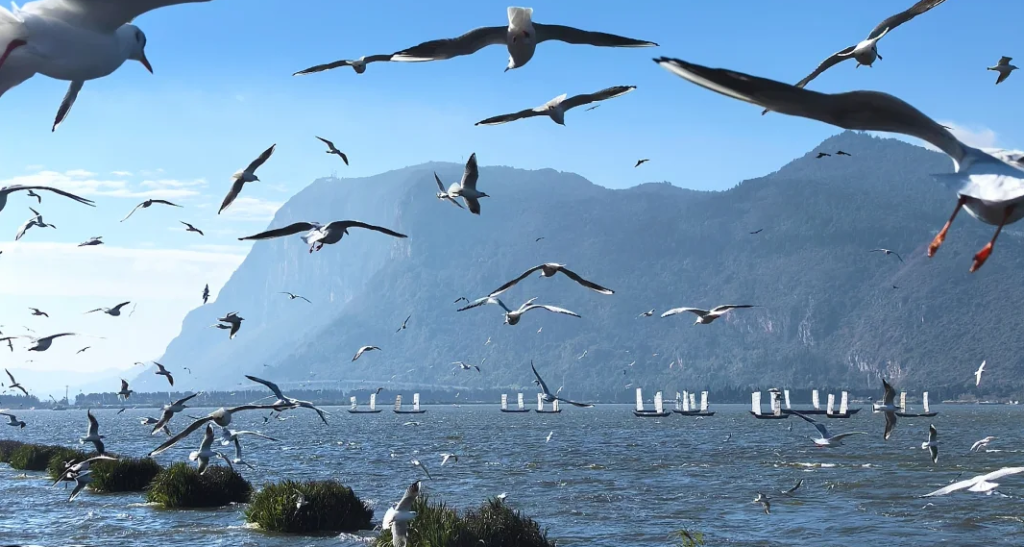
The gull season offers a specific set of language skills you can practice.
Each of these is a real conversation, not a classroom exercise. And each one builds confidence.

Of course, natural practice works best when it is supported by structured learning. That is where small group Chinese classes in Kunming come in.
In a small group class, you take a relevant Chinese lesson in the morning, then go to the lake in the afternoon for real-world practice. Your teacher might give you a list of bird-related words, or practice the sentence patterns you will need for asking questions. When you go out, you have the tools to actually use them.
Afterward, you come back to class and debrief. You share what you heard, what you said, and where you got stuck. Your teacher corrects your mistakes and helps you improve for next time.
This cycle — prepare, practice, debrief — is what makes small group Chinese course in Kunming so effective. The classroom gives you the structure. The lake gives you the experience. Together, they create real progress.
For anyone looking to pursue Chinese studies in Kunming, the gull season is the perfect time to start this cycle.
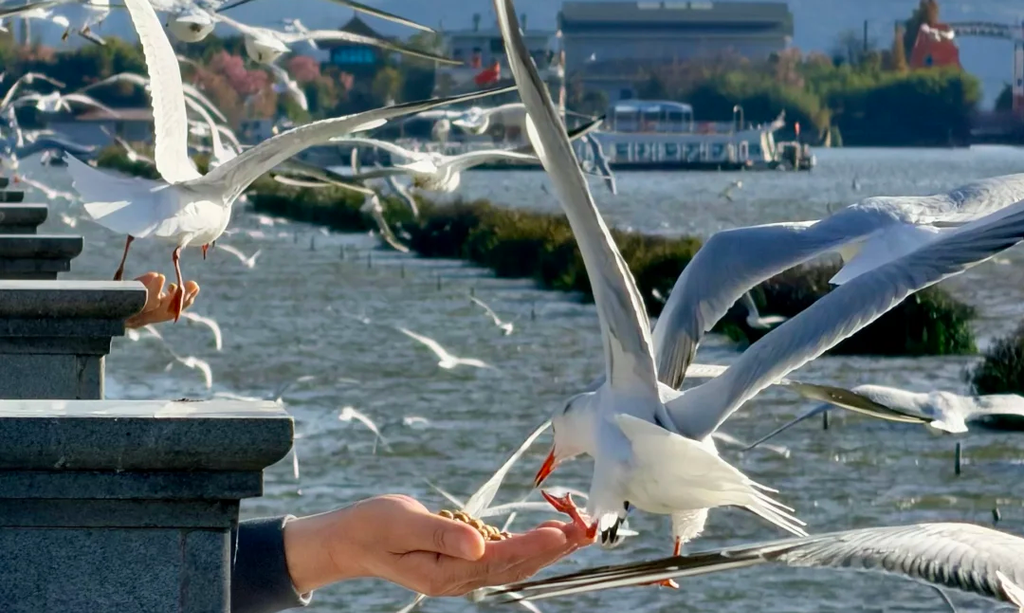
Here is what a typical gull-season study day might look like.
This simple rhythm — class, lake, review — turns a single afternoon into a full day of language learning.


The gulls stay until March. Then they leave, flying back to Siberia. The lake grows quiet again.
But the lessons stay. The words you learned, the conversations you had, the confidence you built — these do not fly away.
If you are in Kunming this winter, do not miss the gulls. Go to the lake. Bring some bread. Say hello to the person next to you. And remember: every conversation is a chance to learn Chinese in Kunming.
The gulls are waiting. So is the language.
Thank you so much for contacting Sojourn Abroad! We can’t wait to welcome you in China!