


We will get back to you within 1 working day!
Thank you so much for contacting Sojourn Abroad! We can’t wait to welcome you in China!
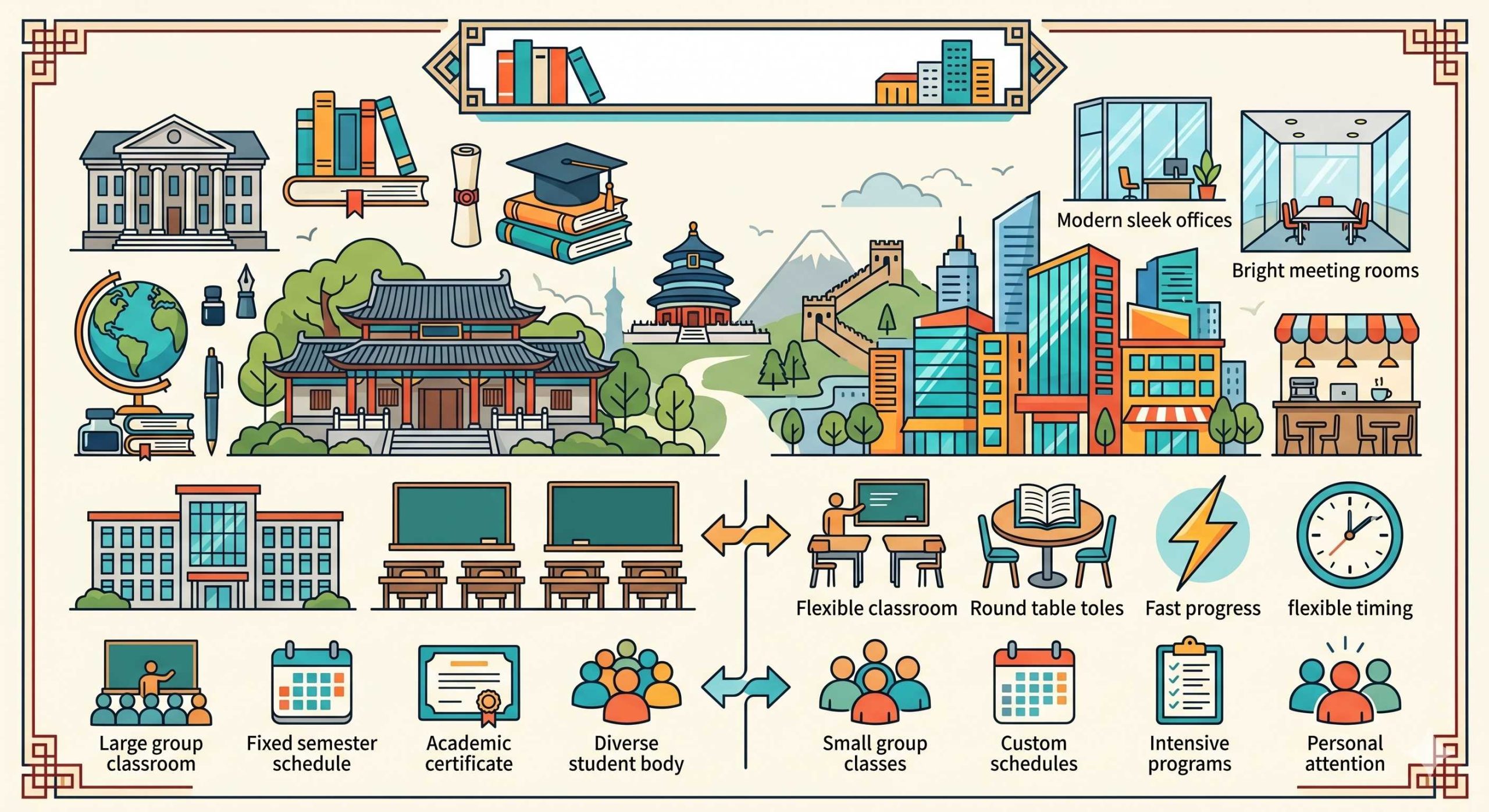
If you have decided to learn Mandarin in Beijing, congratulations. You have chosen the very heart of the language. However, once you start searching for programs, you quickly encounter two distinct paths: the traditional university route and the flexible private language school. Both exist within the city’s bustling streets, yet they offer very different experiences. Understanding the difference can save you time, money, and quite a bit of paperwork.
Here is a practical look at how these two options compare, and why one might suit your lifestyle better than the other.
Universities in Beijing operate on rigid academic calendars. If you miss the September or March enrollment deadlines, you might wait another six months. Even after enrollment, you must attend orientation week, follow the university’s holiday schedule (including long breaks for Lunar New Year and summer), and complete a fixed semester of 16 to 20 weeks. Classes run Monday through Friday, often from 8:00 AM until 3:00 PM or later, with limited flexibility for absences. This structure works well for students seeking a full academic immersion and campus life, but it leaves little room for travel, part-time work, or personal exploration.
Private language schools offer a different rhythm entirely. At places like Sojourn Abroad, you can Start on any Monday. There are no semester breaks you must conform to. You choose your start date based on your flight, your work schedule, or simply your personal readiness. The Duration 2-52 weeks means you decide exactly how long to stay—a two-week intensive sprint during a business trip, a three-month summer deep dive, or a full year of serious study. You can also extend your course easily without waiting for a new semester to begin. This flexibility is a game changer for working professionals, digital nomads, or travelers who do not want to put their lives on hold for an academic calendar.


University Chinese programs often suffer from large lecture-style classes. You might find 20 to 30 students in a room, sometimes even more. Each student enters with a slightly different level of proficiency—some have studied for years, others are absolute beginners. The professor must teach to the middle, leaving advanced students bored and beginners lost. Speaking practice becomes severely limited; in a 90-minute class, you might speak for only two or three minutes. Pronunciation errors go uncorrected because the teacher simply cannot hear everyone. The professor’s attention spreads thin across dozens of faces, and many students feel invisible.
Private schools prioritize small groups. Small Group Class ≤ 10 Students is standard at focused institutions like Sojourn Abroad. With fewer than ten people, each student speaks multiple times per class. The teacher learns your name, your strengths, and your weak tones. Corrections happen immediately—not days later on a written assignment. In Beijing, where a slight tone change turns “mother” (mā) into “horse” (mǎ), this direct feedback is invaluable. You do not hide in the back of a lecture hall. You participate actively. You make mistakes safely. You improve faster.
This is where many students feel the most confusion. Universities naturally provide student visas (X1 or X2), but they require full semester enrollment and paid tuition upfront—often all 16-20 weeks at once. You must also provide proof of university housing (typically a dormitory assignment) and complete a medical examination approved by the university. If you only want two months of study or if you plan to travel after your course, the university system struggles to accommodate you. Changing your plans mid-semester can jeopardize your visa status.
Private language schools have adapted to modern learners’ needs. A provider like Sojourn Abroad assists with the Long-term Visa Student visa process for eligible courses. You can enroll for 12 weeks or more and receive the necessary visa support documents. The process is more transparent: you know exactly what paperwork you need, how long it takes, and what the requirements are. You are not waiting for a university housing office that processes hundreds of students or an international student department that responds only during business hours. The communication is direct, often via email or messaging apps, with real answers in days, not weeks.
However, a word of caution is necessary here. Not every private language school has the legal qualifications to provide student visa documentation. Some operate without proper licensing or use alternative visa types that may not be legal for full-time study. It is essential to choose a school that is fully accredited and compliant with Chinese regulations. Sojourn Abroad holds all the required licenses and documentation, giving you peace of mind that your visa status is secure. Always verify a school’s credentials before committing to a program.
Finding housing in Beijing can overwhelm newcomers. University dorms offer convenience and built-in community, but they come with significant trade-offs. You share a room with one to three other students. Privacy is minimal. Some dorms enforce curfews or restrict overnight guests. Bathrooms are shared, often down the hall. The dormitory location is fixed—you cannot choose a neighborhood you prefer.
Off-campus apartments give you freedom, independence, and privacy. However, landlords rarely speak English. Rental contracts are written in complex Chinese legal language. Online listings on local platforms are full of scams, fake photos, and bait-and-switch offers. Utility bills, deposit rules, and maintenance responsibilities vary widely. Without local knowledge, you could easily overpay or end up in an unsafe area far from your school.
Private schools often address this gap through add-on services. For example, Apartment Hunting Add-on services take the stress out of arrival. Instead of wandering through unknown neighborhoods or messaging strangers on classified sites, you receive pre-vetted options near your school. Someone checks the landlord’s credibility, visits the property, and confirms the photos match reality. You see the apartment (or at least a detailed video) before signing anything. This is a practical solution for anyone who values their time and sanity.
Sojourn Abroad offers a range of accommodation options to suit different needs and budgets, all located conveniently close to the school:
All these options are located within a short distance from Sojourn Abroad, giving you the advantage of walking to class without spending time and money on long commutes. Whether you prefer a family homestay with daily language practice, a private apartment with full independence, a hotel with daily housekeeping, or a budget hostel with social energy, you can find something that fits your stay duration and budget. The proximity to the school means you can roll out of bed and be in class within minutes—a luxury that university students living in dorms or far-flung apartments rarely enjoy.
Universities advertise low tuition, but watch for hidden fees. Registration fees, textbook costs, and mandatory insurance add up. You also pay for the entire semester, even if you leave early.
Private schools offer transparent pricing. Sojourn Abroad are available As low as USD $230/week. That cost includes classes, materials, and access to the school’s resources. When you calculate cost per hour of small-group instruction, the value becomes clear. You pay for what you use, not for a dorm bed you do not want or activities you will not attend.
Both universities and private schools typically offer around 15 Classes Per week. That is two hours per day, five days a week. The difference lies in what happens outside those 15 hours. University students often feel tied to campus. Private school students can explore Beijing’s hutongs, visit the Great Wall on a Thursday, or catch up on homework at a café. The 15 classes provide structure without suffocation.

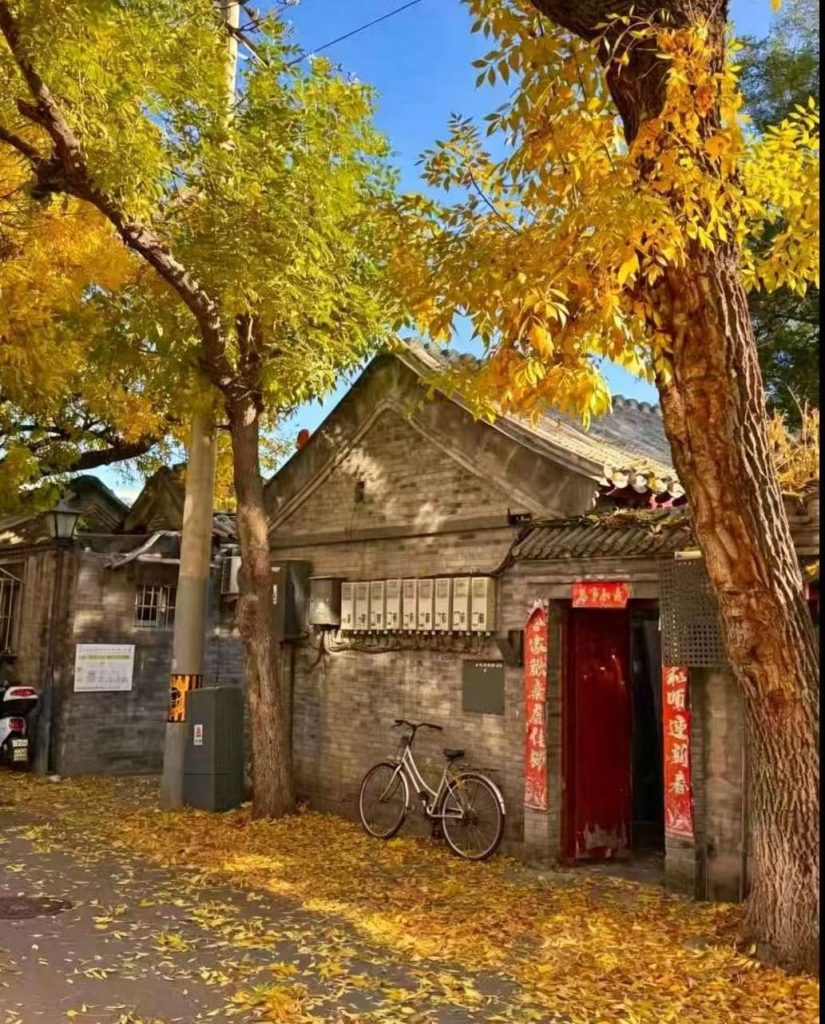

Why Beijing specifically? Three clear reasons stand out.
First, The Proximity to Standard Mandarin. Beijing pronunciation forms the basis of Putonghua, the official language of China. Learning here means hearing correct tones from every shopkeeper, taxi driver, and neighbor. You absorb the standard accent naturally.
Second, A Living Museum of Chinese History. From the Forbidden City to the Summer Palace, history surrounds you. Each weekend becomes a lesson. You do not just read about Chinese culture; you walk through it. Private school schedules allow time for these explorations.
Third, A Hub for Global Career Networking. Beijing hosts embassies, multinational corporations, and startups. The connections you make here—classmates, teachers, local professionals—open doors. Speaking Mandarin at a business level sets you apart in global job markets.
Yet even with these three advantages, one question often remains: how do you move beyond the classroom and truly surround yourself with the language every waking hour? Classes give you structure, but immersion happens in the small moments—ordering coffee, asking for directions, chatting with a neighbor. For a deeper look at how to create a full Mandarin environment beyond the textbook, you may find value in our detailed guide: How to Find Total Mandarin Immersion in Beijing. It explores practical strategies to turn daily life into a continuous learning experience.
Making Your Choice
So, university or private school? If you want a traditional campus life, a large library, and a long-term degree path, the university serves you well. If you value flexibility, immediate start dates, small classes, and practical support like apartment hunting, the private school wins.
For many learners today, the private route simply fits modern life better. You keep your autonomy. You start when ready. You study for exactly as long as needed.
If this sounds right for you, explore Sojourn Abroad. Their Beijing program offers weekly pricing, Monday starts, and genuine support for long-term stays. Learning Mandarin should not require sacrificing your freedom. In Beijing, you can have both.
By Karina
Course Consultant at Sojourn Abroad
Helping you navigate your study abroad journey.
Thank you so much for contacting Sojourn Abroad! We can’t wait to welcome you in China!