


We will get back to you within 1 working day!
Thank you so much for contacting Sojourn Abroad! We can’t wait to welcome you in China!

If you have been studying Mandarin for a while, you have likely heard the whispers about the big change. The old HSK 2.0 exam served students well for decades, but in 2021, the landscape shifted. We are now fully in the era of the New HSK 3.0 standards. For students currently aiming for Level 3, this change brings both challenges and exciting opportunities. The old test was sometimes criticized for feeling disconnected from real-world speaking and writing. The new version fixes this by focusing on practical communication and character recall, not just passive recognition.
Let me walk you through exactly what has changed, what Level 3 looks like now, and how you can adjust your study strategy to succeed.
Under the old HSK 3, vocabulary was taught as isolated items. You would learn “apple,” “buy,” and “how much,” but the exam rarely asked you to use them together in a realistic scenario. New HSK 3.0 organizes its 973 words around thematic topics. For example, around the topic “transportation,” you learn a cluster of related words at once: subway, bus, get a taxi, navigation, rush hour, scan the code. This means exam reading passages are no longer random sentences but real situations where words naturally appear together.
What this means for you: In the old test, learning “hospital” and “pain” was enough. In the new test, you also need to know “register,” “outpatient,” “take temperature,” and “prescribe medicine,” because the reading passage might be an actual hospital receipt or medicine label.
The old HSK 3 had vague requirements for Chinese characters. You needed to recognize about 600 characters (one per word), but the writing section could be passed with very simple strokes. New HSK 3.0 clearly separates two levels:
More importantly, the new exam tests your understanding of how characters are built. For example, you might see a question like: “Which two components make up the character ‘妈’ (mother)?” Or “Add three different radicals to ‘青’ to form three new characters and make a word for each.” The old exam never asked anything like this.
What this means for you: You can no longer rely on visual memory to pass the writing section. You must truly understand radicals and components. The good news is that once you master these 300 core characters, you can guess the meaning of up to 500 additional characters by recognizing their components.
This is one of the most overlooked differences. Old HSK 3 listening was recorded in a soundproof studio with standard broadcast pronunciation. Every syllable was evenly spaced, with almost no connected speech, dropped sounds, or background noise. New HSK 3.0 listening introduces three realistic features:
What this means for you: In the old test, understanding 70% of the words was enough to guess the answer. In the new test, you need to understand about 85% to filter out the noise. The listening section is no longer testing “can you hear the sound” but “can you extract information from real-world noise.”
Old HSK 3 reading passages were specially written for the exam. Sentences were perfectly structured, and vocabulary was strictly limited to the 600-word list. These texts barely exist in real life. New HSK 3.0 Level 3 uses simplified authentic materials, including:
What this means for you: You might see a sentence like “明天8:30公司门口集合,别迟到哈~” (Gather at the company gate tomorrow at 8:30, don’t be late~). The “哈” and the wavy dash would never appear in the old exam, but they are everywhere in real life. You need to understand tone and casual expressions.
Old HSK 3 writing had only one question type: rearrange scrambled words into a correct sentence. For example: “吃/我/苹果/喜欢” → “我喜欢吃苹果” (I like to eat apples). This is really a test of word order, not actual writing.
New HSK 3.0 Level 3 writing has two tasks:
The second task forces you to use vocabulary, grammar, punctuation, and tone all at once. You even need to know that using three exclamation marks like “超级好看!!!” is appropriate for a friend, but not for a formal letter.
What this means for you: You can no longer memorize sentence templates. You must learn to adjust your tone and word choice based on the situation (friend, elder, stranger).
The structure of the exam has shifted to mirror real life. There are three primary sections: Listening, Reading, and Writing.
In Listening, the old test often used slow, robotic voices. The new version uses more natural pacing and includes background noise or filler words (like “um” or “that is to say”). This is harder but much more practical. In Reading, you will see more authentic materials: short text messages, restaurant receipts, and Weibo posts. The old version relied heavily on isolated sentences. The new version tests your ability to scan a paragraph for context.
Finally, the Writing section has been upgraded. You are no longer just filling in blanks. You will be asked to rearrange words into correct sentences and write short responses to prompts. For Level 3, the prompt might be something like, “Write two sentences about your weekend plan.” You need to produce characters correctly.

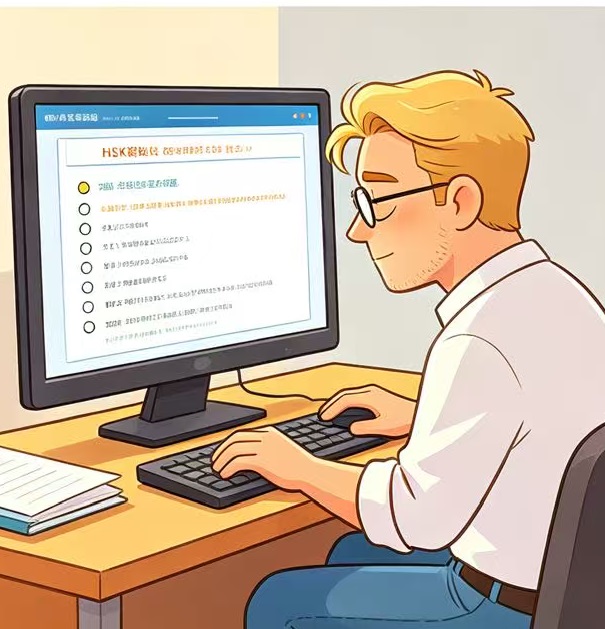
It is easy to look at the increased vocabulary and writing requirements and feel overwhelmed. But from a teacher’s perspective, the New HSK 3.0 is a superior framework. The old system allowed students to pass HSK 4 without being able to write a simple thank you note. That is a problem. If you pass New HSK 3.0, you genuinely have a functional command of the language.
You will be able to navigate a Chinese restaurant, explain simple symptoms to a doctor, and understand basic social media posts. The test aligns with the Common European Framework of Reference (CEFR) more closely now, meaning your certificate holds more weight for academic or professional applications.
If you are currently preparing for Level 3, you need to change your habits. Passive learning—just watching videos or flipping flashcards—will not cut it anymore. You need active recall. Practice writing each character in the Level 3 list at least five times daily. Use a grid notebook and say the pronunciation out loud as you write.
For listening, stop using slowed-down audio. Watch Chinese vlogs at normal speed, even if you only catch every third word. Your brain will adapt. For reading, cover up the pinyin on your textbook. Force yourself to recognize the character shape first, then check the pronunciation.
The difference between a student who passes and a student who masters the language is environment. You can memorize 973 words in your home country, but cementing those words into long-term memory requires using them when there is no safety net. You need to order coffee when the barista does not speak English. You need to ask for directions when your phone is dead.
This is why immersion matters. The most efficient way to bridge the gap between “knowing” Level 3 content and “living” it is to spend time in a place where Mandarin is the water you swim in. Many learners reach a plateau around this level because they have learned the rules of the game but have not played the game itself.
That is where programs like the one offered by Sojourn Abroad in China become invaluable. They understand the rhythm of the New HSK precisely because their curriculum is built around these updated standards. Rather than just drilling test questions, you will be speaking from day one.
Sojourn Abroad in China offers four distinct levels that map perfectly onto the New HSK framework. The Beginner level is for students who have never studied Chinese or have studied a little, focusing on pinyin and basic greetings. The Elementary level is for students who are around HSK 1 to 2, building the foundational vocabulary you need before tackling the new Level 3 workload. If you are reading this guide, you likely belong in the Intermediate level, which is for students who are around HSK 3 to 4. This is where you will actively practice writing those 300 characters and debating daily topics with peers. Finally, the Advanced level is for students who are around HSK 5 to 6, refining fluency and idioms. If you are curious about what makes a quality Chinese program in Kunming and want to learn more about Sojourn Abroad, check out our full guide: How to Choose a Qualified Chinese Language School in Kunming? (A Full Guide).It walks you through everything you need to know before making your decision.
Of course, knowing where you fit in the new HSK framework is only half the picture. You might also be wondering: how long will it actually take me to move from one level to the next? The answer depends on your study habits, immersion environment, and realistic expectations. For a detailed breakdown of realistic timelines for each HSK level—and exactly how Sojourn Abroad supports you at every stage—be sure to check out our companion post How Long Does It Take to Learn Mandarin? (Realistic Timeline).There, you will find practical milestones for each level, from recognizing your first characters to holding fluent conversations, alongside specific strategies we use in China to help you reach those goals faster.
This version keeps the promotional tone natural, avoids abrupt cuts, and frames the second blog post as a helpful resource rather than a hard sell. Would you like me to also write the full “How Long Does It Take to Learn Mandarin?” blog post mentioned in the link?
Do not rush. Under the new standards, reaching Level 3 realistically takes about six to eight months of consistent study if you are starting from zero, or three to four months if you already passed the old HSK 2. The exam is harder, but the reward is higher. You will emerge not as a tourist who knows a few phrases, but as a genuine communicator. If you are wondering how to structure your study month by month, or whether you can make faster progress, check out our other blog post: Can You Learn Chinese in 6 Months? It breaks down a practical monthly learning plan that pairs well with the timeline discussed here.
Embrace the writing. Love the radicals. And remember that every character you learn in Level 3 is a key that unlocks a conversation you could not have yesterday. Good luck with your preparation.
By Karina
Course Consultant at Sojourn Abroad
Helping you navigate your study abroad journey.
Thank you so much for contacting Sojourn Abroad! We can’t wait to welcome you in China!