Hello there, dear international friends! Our country, China, is developing better and better. All aspects of the system are gradually improving, and the five-in-one development is advancing comprehensively. Economic, political, cultural, social, and ecological civilization construction are all advancing in coordination. More and more foreign friends like you want to come to China to experience the real life here and feel the local customs and traditions. Our country is open-armed and warmly welcomes you. We are glad to see the exchange and integration of cultures. Before coming to China, did you have a lot of concerns and didn’t know how to smoothly connect with China? Sojourn Abroad is exactly the school that can help you solve these problems. You can start your journey on any Monday and it can last from 2 to 52 weeks. The price is 280 yuan per week. We also help you with homestay or provide apartment hunting services.
First of all, when coming to China, you must choose a city. Where do you like? The bustling Beijing and Shanghai, the Chengdu mentioned in the songs, or the Hangzhou with the beautiful West Lake? When you choose a school, you also choose a city and a lifestyle. The following cities are the most popular, distinctive, and friendly to foreigners in China, each with its unique charm and function. Sojourn Abroad can serve you in any of these cities.Here are core features of these cities:
First-tier international metropolises (commercial, cultural, and globalized centers)
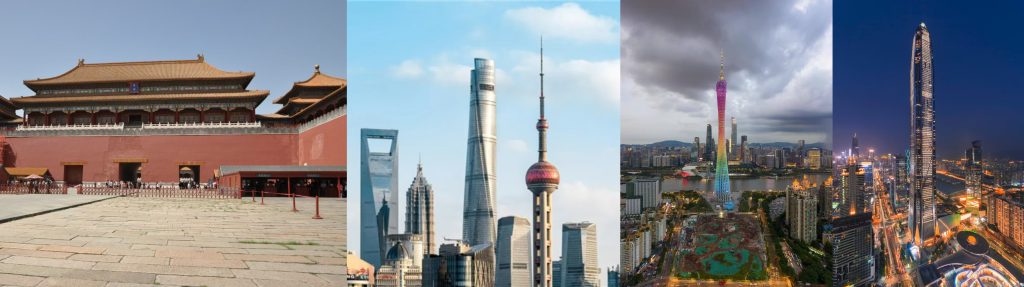
Beijing: The capital of China, a political, cultural, international communication and educational center, which can help you enhance your global career prospects. It has a profound historical background (the Forbidden City, the Great Wall), is full of opportunities and competition, and has a fast-paced life. You can learn standard Mandarin here.
Shanghai: The economic, financial, trade and shipping center of China. Highly internationalized and modernized, it is fashionable and exquisite, allowing you to experience the modern Chinese lifestyle. The local culture is inclusive, and there is a large expatriate community, making it easy to transition and integrate.
Guangzhou: The gateway to South China and a commercial city with a thousand-year history. It has a strong business atmosphere, is a paradise for food (Cantonese cuisine), and you can learn Cantonese here. The life atmosphere is pragmatic, and it is adjacent to Hong Kong and Macao.
Shenzhen: A city of technology and innovation, offering broad career development opportunities. It is home to a large number of high-tech enterprises, has modern urban planning, and as an immigrant city, it is highly inclusive. Mandarin is very commonly used.
A list of city flowers:
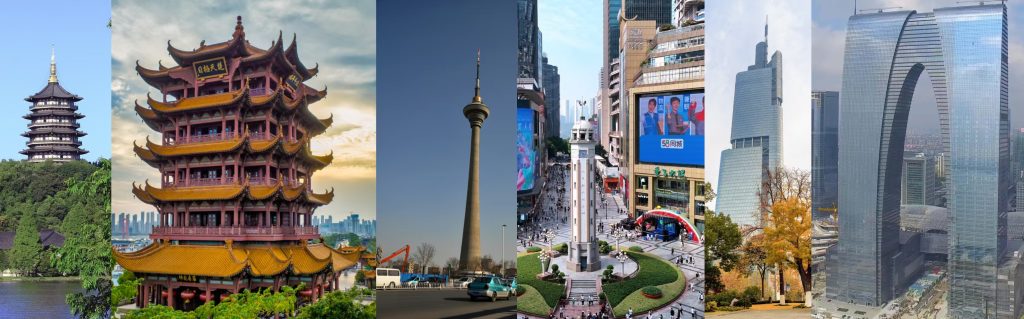
Suzhou and Hangzhou’s osmanthus flowers; Chongqing’s camellias; Wuhan and Nanjing’s plum blossoms. (Repeated flowers omitted)
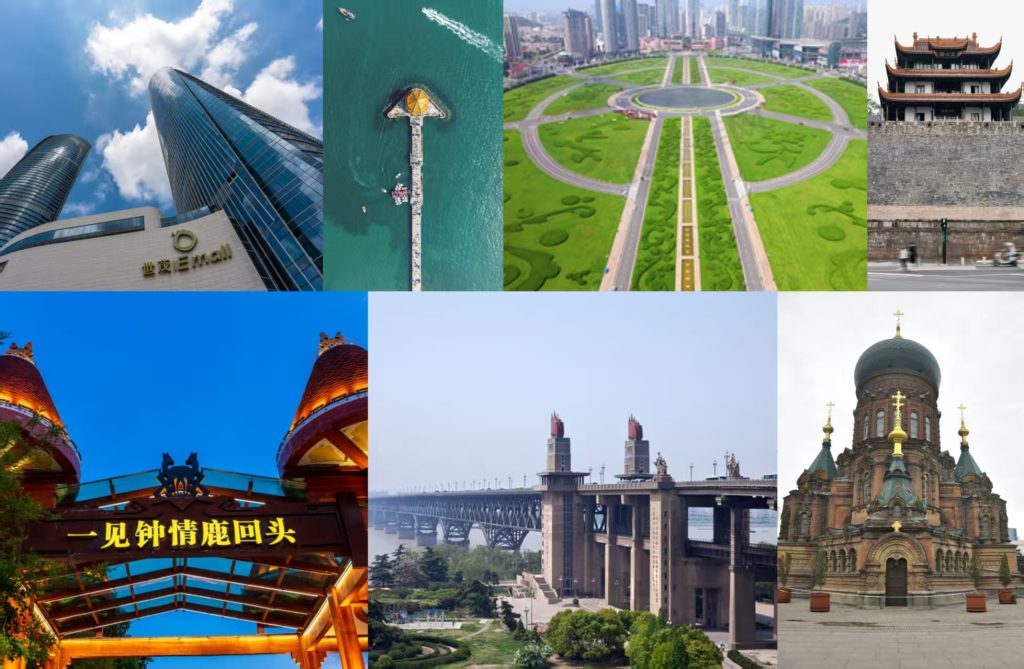
The picture:
The picture shows the city scenery.
New first-tier / regional core cities (economically dynamic and distinctive)
Hangzhou: A hub of digital economy and e-commerce (headquarters of Alibaba), with beautiful scenery (West Lake), teahouses and parks everywhere. It has a strong atmosphere for internet startups and a high quality of modern life.
Chongqing: Known as the Mountain City and River City, it features a magical 3D urban landscape. Famous for its spicy cuisine and hot pot. It is developing rapidly, full of the hustle and bustle of daily life, and brimming with opportunities.
Wuhan: A central hub in Central China. It is home to numerous universities, exuding youthful vitality with a large student population. It blends tradition and modernity (ancient Yellow Crane Tower, the area along the Yangtze River). You can hear various accents here.
Nanjing: An ancient capital of six dynasties and the capital of Jiangsu Province. It is rich in historical and cultural heritage (Sun Yat-sen Mausoleum, Confucius Temple), offering access to ancient cultural relics. It has strong educational and research capabilities and a high level of urban greening.
Tianjin: An important port city in the north, adjacent to Beijing. It offers a rich experience of crosstalk and local dialect activities, and its residents are warm and friendly. It features Western architectural styles (Five Avenues), has a relatively relaxed pace of life, and is more affordable than Beijing. It is only a 30-minute high-speed rail ride from Beijing.
Suzhou: Known as the “Paradise on Earth”, it combines classical gardens and canal streets with modern industrial parks. It has a developed economy, beautiful environment, and a refined lifestyle. It is located near Shanghai.
Cities with livable and tourist-friendly characteristics (beautiful environment, comfortable living)
Xiamen: A coastal garden city with pleasant climate and clean, romantic environment (Gulangyu Island is here). Experience southern Chinese life and Taiwanese culture. Suitable for living with a strong artistic atmosphere. Here, relatively clear and standard Mandarin is spoken.
Qingdao: A coastal city with red tiles, green trees, blue sea and sky. Famous for beer, German-style architecture and seafood, it is cool and pleasant in summer. The Mandarin spoken here is close to the national standard, and the cost of living is much lower than that in Beijing and Shanghai.
Dalian: A northern coastal pearl with a clean environment and comfortable climate. With a low population density, it has an open international perspective and a history of foreign enterprises’ presence. It features Russian and Japanese architectural styles and many squares, making it a suitable place to live.
Sanya: A tropical coastal city for tourism and vacation, known for its sunshine, beaches and sea water. A winter escape destination, it is strong in vacation and retirement attributes. It has a visa-free policy.
Harbin: The Ice City, a representative of northern China’s scenery. In winter, it has the dreamlike Ice and Snow World, and its architecture is full of foreign charm (Central Street). It is cool in summer. The Mandarin spoken here has a standard and neutral accent. There are fewer Western tourists, but people are warm and friendly.
Changsha: A city of entertainment, media and food. Home to Hunan TV, it is a core area of China’s media industry. It has a rich nightlife and attracts young people with Hunan cuisine (spicy crayfish, stinky tofu) and vitality. The cost of living is not high.
Nanning: The capital of Guangxi, known as the “Green City”. The permanent venue of the China-ASEAN Expo, it is a place to understand the business culture between China and Southeast Asia. With subtropical charm, it is full of Southeast Asian-style food and fruits. You can come into contact with various southern accents and local dialects.
How to choose a city?
Goal-oriented classification method:
Work and business: Preferred cities are Beijing, Shanghai, Shenzhen, Guangzhou, Hangzhou and Suzhou.
Historical and cultural experience: Preferred cities are Xi’an, Nanjing, Beijing, Suzhou and Chengdu.
Livable and living environment: Preferred cities are Xiamen, Qingdao, Chengdu, Suzhou and Hangzhou.
Food exploration: Chengdu, Chongqing, Guangzhou, Changsha and Xi’an are absolute food paradises.
Unique nature and climate: Sanya (tropical coastal) and Harbin (ice and snow)
Geography-driven classification method:
The Qinling-Huaihe Line is the dividing line between the north and south of China. Among the 17 cities, Beijing, Tianjin, Harbin and Dalian are typical northern cities; Shanghai, Nanjing, Hangzhou, Suzhou, Wuhan, Chongqing, Chengdu, Guangzhou, Shenzhen, Xiamen, Nanning and Changsha are typical southern cities.
Northern culture:
It has a more profound, grand and direct temperament. Historically a political center, it has an upright and grand cultural background, emphasizing order and collectivism. People are straightforward, with direct language and tone, and prioritizing Justice in social interactions. The diet is mainly based on noodles, with a salty taste and large portions. The architectural style is regular and symmetrical.
The palace walls and ginkgo leaves of Beijing
Southern culture:
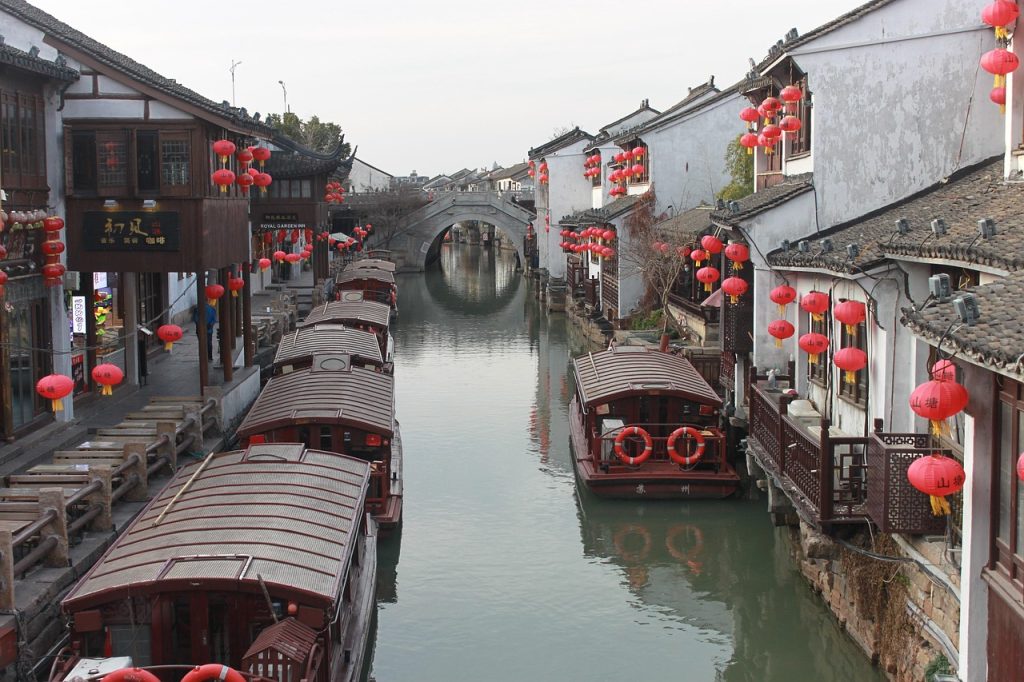
It is more flexible, delicate and pragmatic in temperament. Historically, it was commercially prosperous and culturally diverse and integrated, emphasizing practicality and exploration. People are shrewd, express themselves more tactfully, and value rules in social interactions. The staple food is rice, with a rich variety of flavors (especially sweet, fresh and spicy), and the cuisine is exquisitely crafted. The architectural style is more practical and incorporates the charm of gardens.
The picture:
The pictures shows Suzhou.
About Sojourn Abroad
Sojourn Abroad is an institution specifically designed for international learners, offering immersive Chinese language education and cultural experiences in China. Its core model differs from traditional universities in the following three aspects:
The most prominent advantage of Sojourn Abroad is its extreme flexibility and autonomy. It completely breaks the constraints of fixed academic years, providing flexible course durations ranging from 2 weeks to 2 years, and allowing students to start on any Monday throughout the year, making it possible for working professionals or travelers to seamlessly integrate their studies. More importantly, its network covers over 18 major cities in China, and the course fees are uniformly priced at $280 per week in all cities. This not only enables students to freely choose their starting point based on budget, climate, or cultural preferences but also innovatively encourages them to switch between different cities during their studies, thus achieving a “one-stop” experience of China’s diverse regional cultures, from the weighty north to the elegant south. This cross-regional mobility is its unique selling point.
Sojourn Abroad – An integrated “Life is Learning” model. The institution is committed to extending language learning from the classroom to the entire living environment. Its courses are designed in small classes (no more than 10 students per class) to ensure ample practice opportunities. However, the true core lies in the immersive ecosystem it has built: by offering homestay or assisting with local apartment rentals, and organizing a variety of local activities, it guides students to practice in real-life contexts such as markets, snack shops, and community events. This design turns every aspect of daily life into a language training ground, aiming to achieve the claimed state of being “completely surrounded by the Chinese language environment”, thereby accelerating the transformation from book knowledge to practical communication skills.
Sojourn Abroad provides a clear and transparent learning path and commitment. The institution outlines clear learning expectations for learners and establishes a clear confidence framework. Its courses are strictly aligned with the HSK (Chinese Proficiency Test) levels 1 to 6. More importantly, it offers quantified progress commitments: beginners are expected to be able to conduct basic life communication within 1 to 3 months, achieve seamless communication in China within 3 to 6 months, and reach fluency with 1 to 2 years of continuous study. This transparent roadmap helps learners set reasonable goals and evaluate their progress.
Sojourn Abroad is precisely targeted at the learner market that pursues flexibility, cultural depth and life-oriented learning. It offers a lifestyle solution that combines language learning, cultural exploration and local living.
Sojourn Abroad deeply understands the challenges faced by learners coming to China and systematically removes the obstacles for you.
A Life Guide
Coming to China to study Chinese, whether for a short-term study or a long-term stay, handling the “clothing, food, housing and transportation” well is the key to a smooth start of a new life. The following is a comprehensive guide for foreign friends:
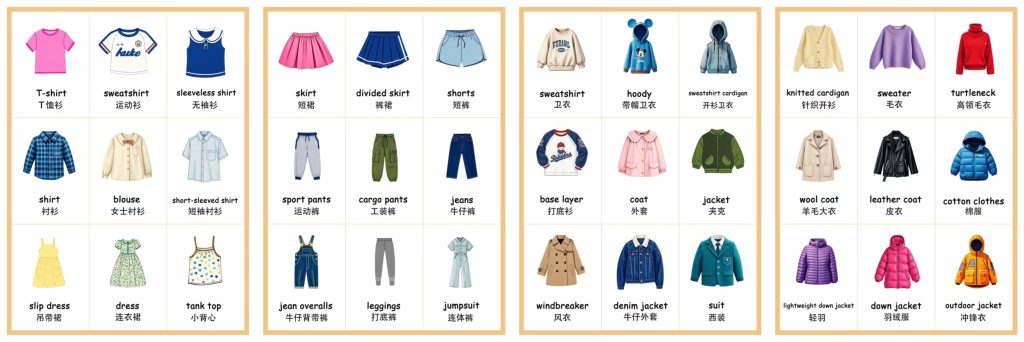
Clothing
1. Climate and Clothing:
China is vast, with significant climate variations. In the north, winters are extremely cold, so thick down jackets are necessary. In the south, summers are hot and humid, so lightweight and breathable clothing is preferred. The Yangtze River Basin has cold and damp winters without centralized heating, so it’s important to stay dry and warm. Before departure, be sure to check the specific weather forecast for your destination city.
About Heating Inquiry:
According to China’s centralized heating policy, the main division can be made based on the traditional Qinling-Huaihe River line.
Cities with centralized heating (north of the Qinling-Huaihe River):
These cities have cold winters and are uniformly planned and organized for centralized heating by the government (mostly using coal, natural gas, etc.), with the heating period usually from November to March of the following year.
Cities without centralized heating (south of the Qinling-Huaihe River):
· Shanghai · Hangzhou (currently only in a few new districts on a trial basis) · Guangzhou · Shenzhen · Xiamen · Changsha · Sanya · Nanning · Chongqing · Suzhou
These cities traditionally do not provide city-wide centralized heating, and residents mainly rely on air conditioners, electric heaters or independent gas wall-hung boilers for warmth.
Cities requiring special mention
Wuhan, Nanjing: Although geographically located in the south, due to their cold and damp winters, they are partially included in the centralized heating range. The coverage in the old urban areas is limited, but new urban areas or specific communities may have heating.
Southern cities such as Hangzhou and Guangzhou: They are exploring localized heating, such as heating newly built public buildings or specific industrial parks, but it is still a long way from covering all residents.
New residential buildings in all cities: Regardless of whether they are in the north or south, more and more new commercial housing units are reserving independent heating systems (such as wall-hung boilers and floor heating), which has become a trend.
Practical Suggestions for Foreign Friends
Renting in northern cities: Winter heating fees are usually included in the property management fees or paid separately. It is necessary to clarify this when renting.
Wintering in southern cities: It is advisable to prepare devices such as electric heaters, oil-filled radiators, and air conditioners in advance, and be aware of the tiered electricity pricing. The perceived temperature due to dampness and cold may be lower than the actual temperature, so moisture-proofing and keeping warm should be noted.
Personalized heating: Regardless of whether in the north or south, using electric blankets, hand warmers, and baseboard heaters, etc., are also common supplementary methods.
2. Shopping and Size:
– Purchase Channels: A wide range of options are available, from international brand malls and local shopping centers to cost-effective online platforms (such as Taobao and JD.com) and wholesale markets (like Yiwu).
– Size Differences: Clothing and footwear sizes in China are generally smaller than those in Europe and America. It is recommended to try on items in person or refer to specific centimeter/inch size charts.
3. Cultural Considerations:
In formal business settings, when visiting temples, or in certain traditional restaurants, dress neatly and appropriately, avoiding overly casual attire.
Food
1. Dietary culture: Chinese cuisine is rich and diverse, with distinct regional characteristics. Beijing Roast Duck, Sichuan Hot Pot, Cantonese Dim Sum, and Shanghai Xiaolongbao are all worth trying. When ordering food, it is mostly shared, allowing you to experience the joy of “family-style” dining.
2. Dining style:
Language barrier: Restaurants outside tourist areas may not have English menus. You can learn main and common dish names in advance or use the “photo translation” function of translation apps.
Mobile payment: The vast majority of restaurants no longer accept cash payments. It is essential to activate and bind Alipay or WeChat Pay, which are indispensable tools for dining, ordering takeout (Meituan, Ele.me), and shopping at small stores.
3. Drinking water safety: Do not drink tap water directly. Please purchase bottled water or boil water in a water filter or kettle before drinking. Chinese people are accustomed to drinking warm or hot water.
Accommodation
1. Short-term accommodation: You can book hotels, youth hostels or short-term rental apartments through international platforms (such as Booking.com and Airbnb) or domestic Chinese apps (like Ctrip and Meituan).
2. Long-term rental:
– Main platforms: Use reputable intermediary platforms such as Lianjia, Beike and Ziroom, as the properties listed there are relatively reliable. Be cautious of small ads posted by individuals and be on guard against fraud.
Sojourn Abroad offers a one-stop rental service. A one-time fee of 600 US dollars is charged, covering showing you around the property, agency fees, translating the contract, and communicating with the landlord. The prerequisite is that the monthly rent of the rental property does not exceed 600. If it exceeds 600 per month, then the service fee will be the monthly rent.
Transportation
1. Urban transportation:
Public transportation: The metro and bus systems are well-developed and have low fares. Local transportation cards or ride codes in Alipay/WeChat need to be obtained.
Taxis/ride-hailing: Didi Chuxing is the mainstream ride-hailing app, supporting an English interface and international credit card binding, which is more convenient than hailing a taxi on the street.
Shared bikes: Shared bikes and shared bicycles are ubiquitous. Scan the code to ride, which is a convenient option for the “last mile”.
2. Inter-city and long-distance transportation:
High-speed rail: Efficient, punctual and comfortable, it is the best choice for connecting major cities. Tickets can be purchased through the Railway 12306 App, Ctrip or at the station window.
Airplanes: The domestic air route network is dense. Bookings can be made through airline websites or travel apps.
3. Navigation and maps: AutoNavi Maps or Baidu Maps are essential for travel, providing accurate real-time bus and metro transfer, walking navigation and ride-hailing services.
Essential survival tips
The cornerstone of digital life: Ensure that your mobile phone can use Alipay and WeChat normally. These are the “master keys” for payment, transportation, social interaction, and daily life services.
Network access: Arrange for reliable VPN access in advance to access restricted applications in China such as Google、WhatsApp、Instagram.
Cash reserve: Although mobile payment is ubiquitous, it is still necessary to prepare a small amount of RMB cash when dealing with street vendors or in certain specific situations, such as donating money at temples.
Wandering in the sea of books
Learning tips
For foreigners learning Chinese, the right attitude and learning methods will profoundly influence the depth and effectiveness of this journey.
Firstly, in terms of attitude, it is necessary to cultivate an open learner’s mindset and a tenacious spirit of exploration. Please let go of the stubborn preconception of “right” or “wrong”, and embrace what you see and hear with a humble and curious heart. The logic of Chinese society and the subtleties of interpersonal communication may differ from what you are familiar with, but this is not a matter of superiority or inferiority; it is the starting point of understanding. When encountering communication barriers or cultural frictions, please regard them as clues to the puzzle rather than obstacles to progress. Be patient – mastering Chinese is not achieved overnight, but every breakthrough moment from “not understanding” to “instant comprehension” will bring great joy. At the same time, please actively step out of your comfort zone. The vegetable market outside the classroom, the chess games in the park, and the barbecue stalls at night are all more vivid and important Chinese classrooms.
Secondly, in terms of learning methods, it is necessary to strike a balance between “systematic learning” and “real application”, and pay special attention to the following aspects:
First, the priority of pronunciation and tones. The tones in Chinese are part of the meaning, and in the initial stage, it is essential to invest solid effort in imitating and correcting them to form muscle memory, which will clear the fundamental obstacles for future smooth communication.
Second, when learning Chinese characters, both understanding and memorization are important. Do not merely view them as graphic symbols; try to understand the origin and meaning of the basic radicals. This will help you build a network of Chinese characters and significantly improve your reading efficiency.
Third, digest grammar within the context. Instead of memorizing rules in isolation, it is better to observe the application scenarios of sentence structures in a large amount of listening and reading, and cultivate a natural sense of language.
Most importantly, create every opportunity for “comprehensible output”. From daily conversations with teachers to casual chats with roommates, to completing field tasks designed by teachers (such as sending a package or making an appointment in Chinese), you must force yourself to organize language and speak. Mistakes are not scary; they are the cornerstone of progress.
In addition, please delve into the cultural soil to give the language a soul. Language is the carrier of culture. Participating in traditional festivals, learning calligraphy and Tai Chi, savoring tea art, and understanding local history, these experiences will help you understand the emotions and values behind words, transforming Chinese from symbols on the textbook into a living and warm means of expression.
Finally, please allow me to offer you my most sincere encouragement:
By embarking on this path, you have already demonstrated extraordinary courage and vision. Learning Chinese is like a marathon; there will be moments of fatigue and confusion along the way, but please believe that every step counts. When you dream of having a conversation in Chinese for the first time, understand a joke without hesitation, or solve a difficult problem in Chinese, you will experience an unparalleled sense of achievement. This city and this country will become your second classroom, and what you gain will far exceed a language – it is a new way of thinking, a diverse perspective on the world, and a broader, more promising life. Embrace this process and maintain your enthusiasm and perseverance. China welcomes you, and this journey will surely reward you with rich growth and surprises.
I hope this guide is helpful to you. Wish you success in your studies and a wonderful journey!
We will get back to you within 1 working day!
Thank you so much for contacting Sojourn Abroad! We can’t wait to welcome you in China!