


We will get back to you within 1 working day!
Thank you so much for contacting Sojourn Abroad! We can’t wait to welcome you in China!
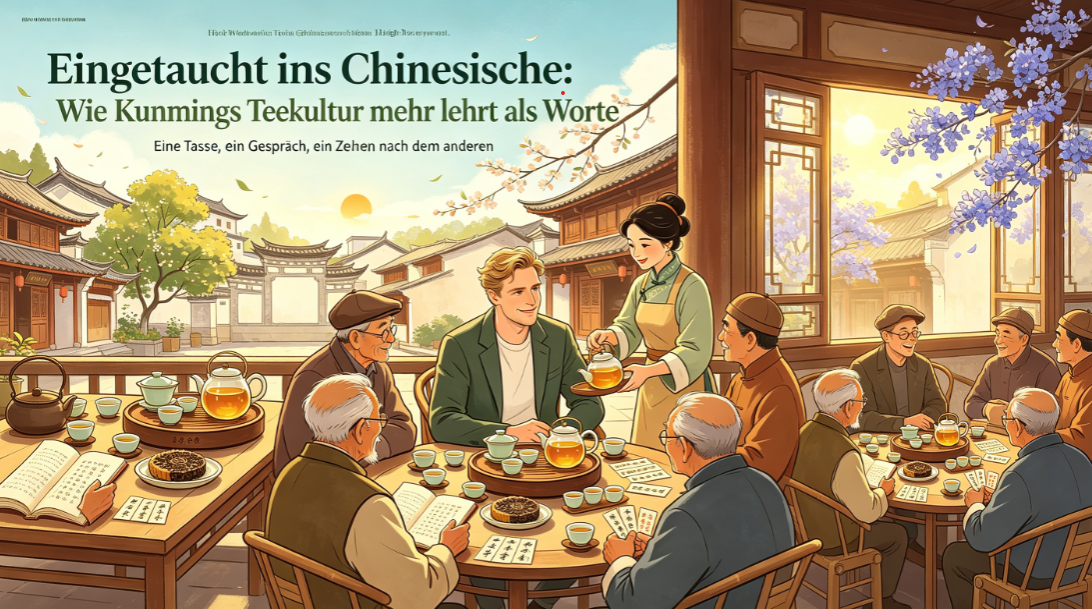
Kunming’s tea culture is not just about drinking tea — it’s a living classroom for anyone learning Chinese. From centuries-old teahouses to the legendary “soaking in teahouses” tradition of the Southwest Associated University, tea has long been woven into daily life in Yunnan’s capital. This article explores how immersing yourself in Kunming’s tea culture can transform your Mandarin learning — one cup, one conversation, one character at a time.
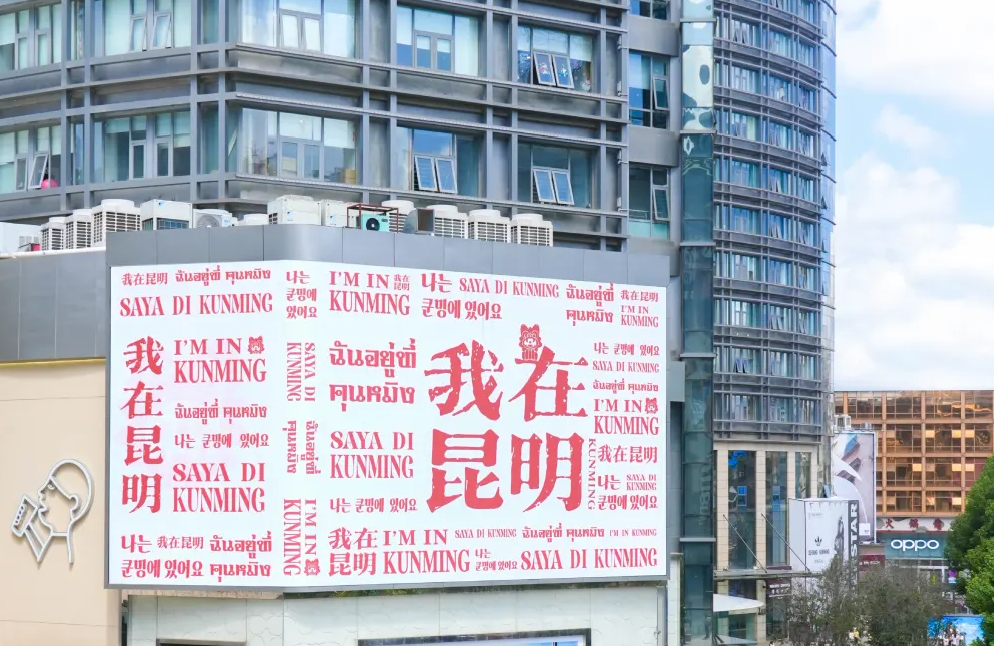
Every language learner knows the feeling.
You memorize a word.
You practice its tone.
You write it ten times.
Then you step outside — and the word vanishes from your mouth.
The problem isn’t your memory.
It’s the gap between the classroom and the world where the language actually lives.
Chinese was never meant to stay on a page.
It was born in markets, on streets, and around shared cups of tea.
In Kunming, that cup of tea might be your best teacher.
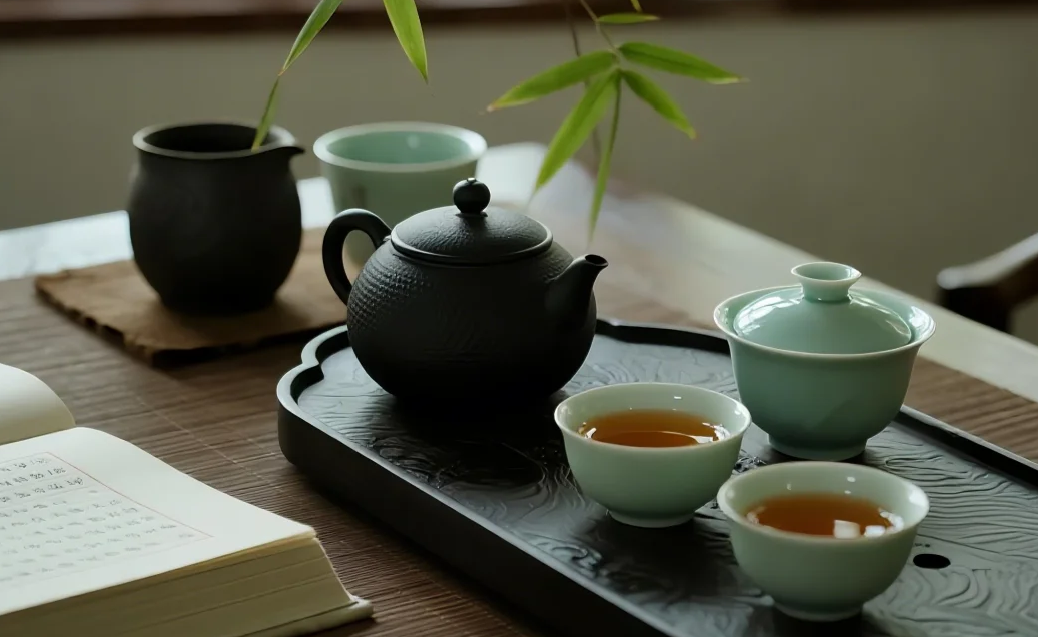
Kunming’s love affair with tea runs deep.
As early as the Qing Dynasty, teahouses dotted the city’s main streets.
Names like Sìhéyuán (四合园), Yíchūnyuán (宜春园), and Táorántíng (陶然亭) were household names.
Their establishments were bustling with customers.
These were not just places to drink tea.
They were the heart of the city’s social life.
News was exchanged there.
Disputes were settled there.
Stories were told there.
The best teahouses advertised a special ingredient: water from Wujing Well.
Locals didn’t just “drink tea.”
They “ate tea” (chī chá, 吃茶).
Or “squatted in the teahouse” (dūn cháguǎn, 蹲茶馆).
These phrases alone tell you something about the culture.
Tea wasn’t a quick sip on the go.
It was something you settled into.
Something you lived in.
For a language learner, this is the first lesson.
The words around tea aren’t just vocabulary.
They are windows into a way of life.
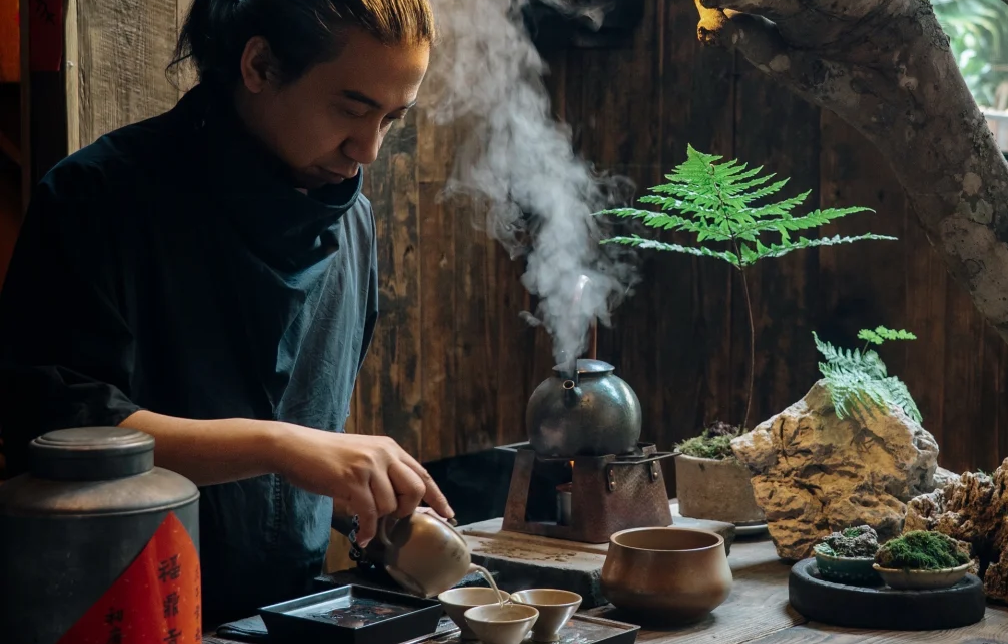
The most remarkable chapter in Kunming’s tea story came during the War of Resistance against Japan (1937–1945).
Three of China’s most prestigious universities — Peking, Tsinghua, and Nankai — fled the invasion.
They regrouped in Kunming as the Southwest Associated University (Lianda).
In those years, something unique happened.
The students brought a Beijing expression with them: páo (泡), meaning “to soak” or “to steep.”
Back in Beijing, you might “soak” in a bath.
In Kunming, they started “soaking” in teahouses.
Locals had always said zuò cháguǎn (坐茶馆) — “sit in a teahouse.”
But the Lianda students spent so much time in teahouses — often an entire day — that “sit” didn’t capture it.
So they created a new word: páo cháguǎn (泡茶馆) — “soak in a teahouse.”
And they really did soak.
The university’s library was tiny and always full.
Dormitories were cramped.
Classrooms were often unavailable.
But Kunming had teahouses — dozens of them.
Two streets near the campus had at least ten.
Students would arrive in the morning, order a single cup of tea, and stay until closing time.
They read. They wrote. They debated. They played bridge.
Some even brought their toiletries to the teahouse and started their day there.
Writer Wang Zengqi studied at Lianda from 1938 to 1946.
He later recalled: “I spent four years at university, but eight years in teahouses.”
He wrote his first novels in Kunming’s teahouses.
“My career as a novelist,” he said, “was brewed in Kunming’s teahouses.”
He also believed something profound: “Teahouses produce talent.”
Why? Because they brought people together.
Students from different disciplines.
Locals from all walks of life.
Refugees carrying stories from across China.
In those humble spaces, surrounded by the smell of old grass tobacco and the sound of boiling water, a generation of China’s finest minds found not just a place to study, but a community.
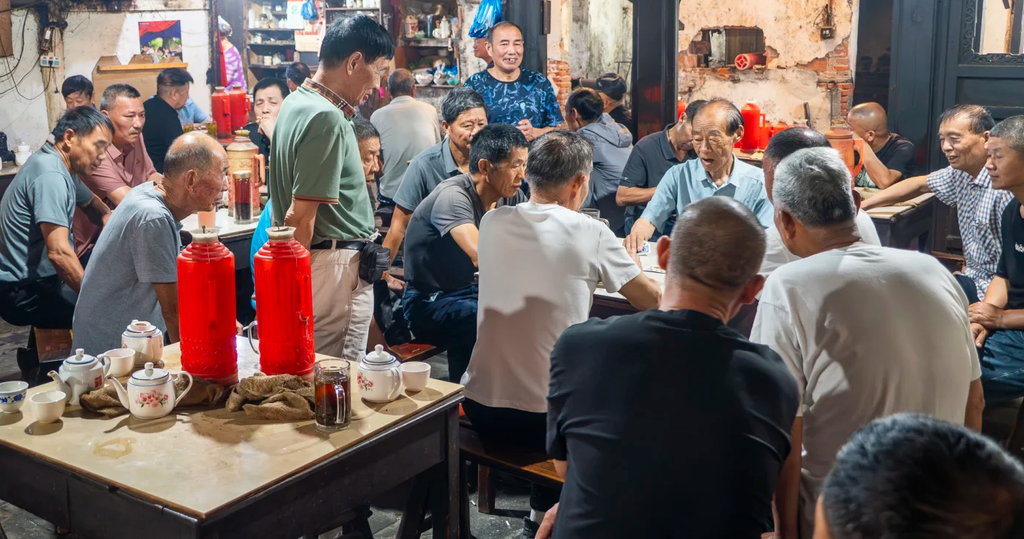
So what does any of this have to do with learning Chinese?
– Context Over Characters
You can memorize the character chá (茶) from a flashcard.
But you won’t feel it the way you feel it when you sit down in a Kunming teahouse.
When you order a cup of pu’er and hear the tea master say: “Zhè shì jīnnián de chūn chá” (这是今年的春茶 — This is this year’s spring tea).
You can learn páo (泡) from a vocabulary list.
But you won’t understand it the way you understand it when you realize you’ve been sitting in the same teahouse for three hours, completely absorbed in conversation.
Context is what makes language stick.
And tea culture is nothing if not context.
– Conversation Over Drills
In a teahouse, you have to speak.
Try ordering tea in Chinese:
The tea master will answer — probably at length.
They’ll tell you about the tea’s origin, its fermentation process, how many times it can be steeped.
Every answer is real Chinese, spoken by a real person, in a real context.
And because you actually care about the answer — you want to pick a good tea — your brain pays attention.
The words stick.
– Culture Over Translation
Tea in China is not just a drink.
It’s a philosophy.
The way you hold your cup matters.
The way you pour for others matters.
The number of times you steep the leaves matters.
These are not arbitrary rules.
They are expressions of deeper values: respect, harmony, patience.
When you learn these things in Chinese, you’re not just learning vocabulary.
You’re learning how Chinese people think about relationships, about time, about hospitality.
That kind of understanding doesn’t come from a textbook.
Kunming’s tea culture is very much alive.
– Yuantong Temple’s Tea House is a favorite among students. Sit by the window during spring, and you’ll see crabapple flowers blooming right outside as you sip your tea.
It’s the kind of scene that makes you want to pull out your notebook and practice writing characters.
– Green Lake Park has its own share of tea spots. Order a pot, find a seat by the water, and listen. You’ll hear locals practicing calligraphy on the pavement, singing folk songs, arguing about chess. These are not staged performances — they are everyday scenes where language lives.
The city also offers structured tea experiences.
And if you’re studying with Sojourn Abroad, you’re in luck.
The school regularly organizes cultural outings that connect classroom learning with real-world experiences.
Whether it’s a visit to a traditional tea house or a weekend trip to Dali’s ancient town — where tea culture runs just as deep — these excursions turn sightseeing into immersive lessons.
Your teachers might even help you practice tea-related vocabulary before you go, so you walk in ready to order, ask questions, and actually understand the answers.
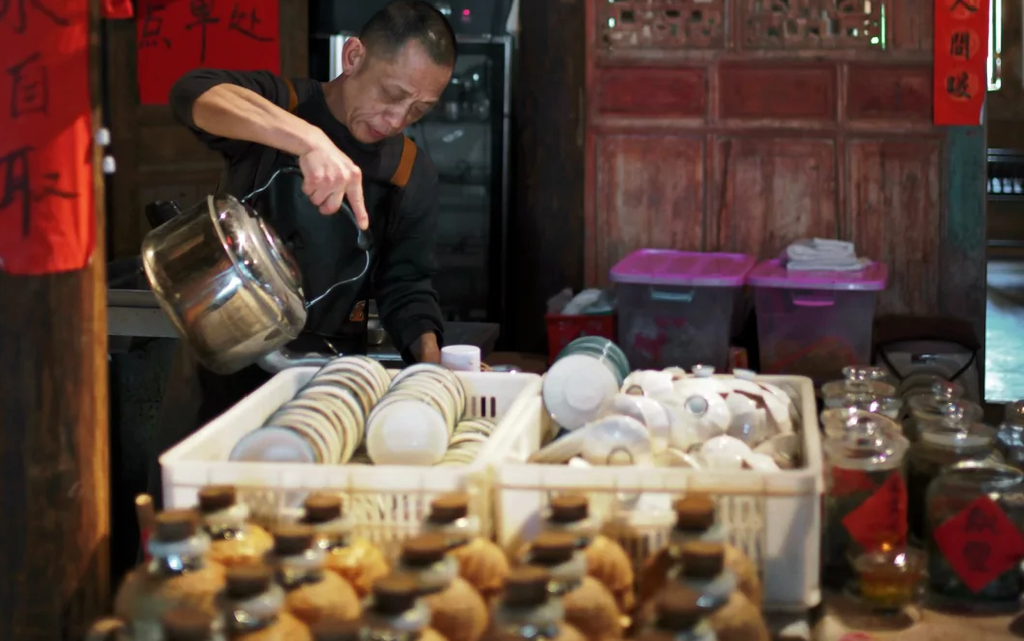
There is a reason Kunming’s tea culture has endured for centuries.
It’s not just about the tea.
It’s about what happens around it.
In Qing-dynasty Kunming, teahouses were where people settled disputes.
They were where news traveled.
They were where strangers became friends.
In wartime Kunming, teahouses were where a displaced generation found community.
Where novels were written.
Where ideas were born.
Today, for language learners, teahouses are where Chinese stops being a subject and starts being a life.
When you sit down in a Kunming teahouse, you are doing more than drinking tea.
You are participating in a tradition that has connected people for hundreds of years.
You are practicing patience — waiting for the water to boil, the leaves to unfurl, the flavors to develop.
You are practicing listening — catching the tones, the rhythms, the humor of real conversation.
And you are practicing speaking — asking questions, making mistakes, trying again.
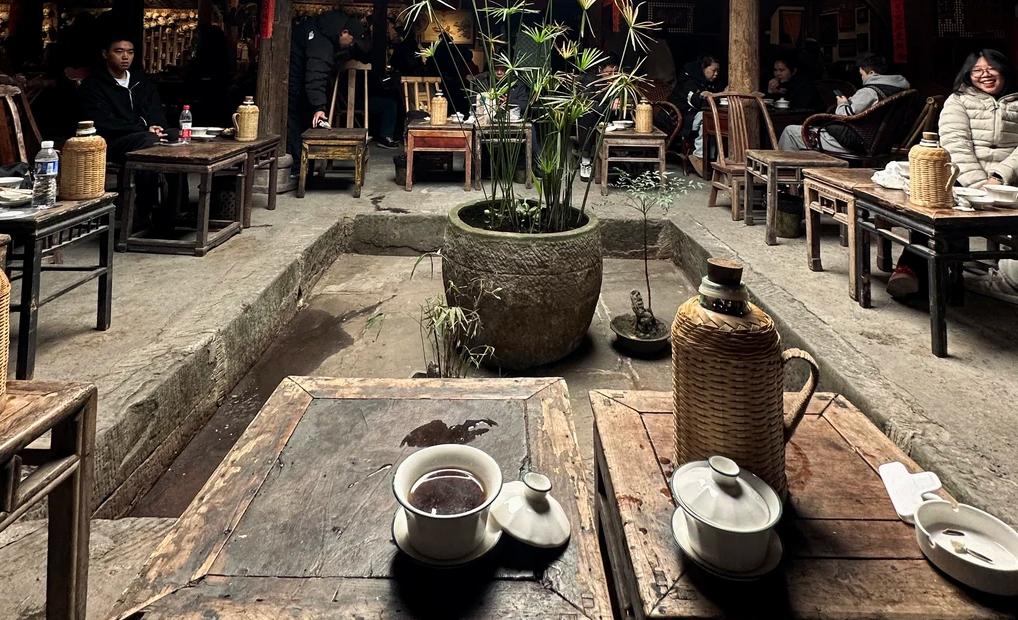
Every cup of tea in Kunming is a lesson.
You learn words: chá (茶), pào (泡), pǔ’ěr (普洱), gōngfu chá (功夫茶).
You learn phrases: “Zài lái yī hú” (再来一壶 — Another pot, please). “Zhè chá hěn xiāng” (这茶很香 — This tea is very fragrant).
You learn culture: how to pour, how to thank, how to sit and listen.
And somewhere between the first steep and the last, you realize something.
You’re not just learning a language anymore.
You’re living it — steeped in it, the way tea leaves are steeped in hot water.
Releasing their flavor slowly, one cup at a time.
In the classroom, you learn Chinese.
In Kunming’s teahouses, you breathe it.
Thank you so much for contacting Sojourn Abroad! We can’t wait to welcome you in China!