


We will get back to you within 1 working day!
Thank you so much for contacting Sojourn Abroad! We can’t wait to welcome you in China!

If you’ve been learning Mandarin for any length of time, you know the feeling: you step off the plane in Beijing or Shanghai, confidently order a coffee or ask for directions, and the conversation flows. Then you take a train to Chongqing—and everything changes.
Suddenly, the crisp “sh” sounds become “s.” The “zh” melts into “z.” The fourth tone drops like a stone off a skyscraper, and words you thought you knew seem to shape-shift before your ears. Welcome to the world of Chongqing Hua (重庆话), a Southwestern Mandarin dialect that can leave even advanced Mandarin learners questioning everything they’ve studied.
This isn’t a bad thing. In fact, understanding the differences between Standard Mandarin (Putonghua) and Chongqing Hua is one of the most valuable—and most overlooked—skills for serious language learners. Here’s what you need to know before your next trip, your next conversation, or your next big language breakthrough.
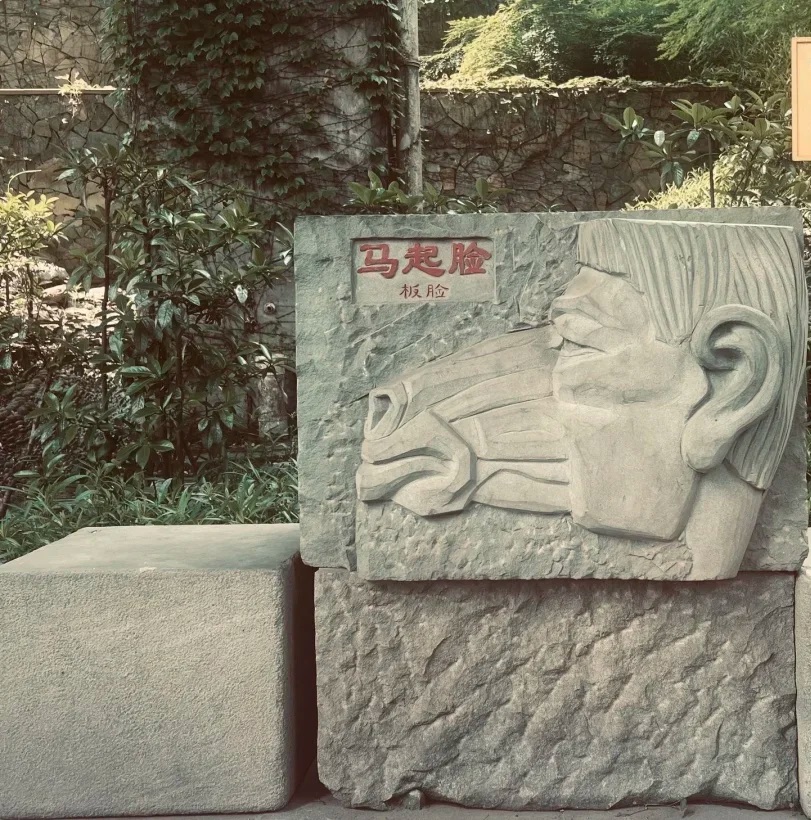

Standard Mandarin has a relatively balanced set of initials: zh, ch, sh stand proudly alongside z, c, s. In Chongqing Hua, that distinction largely disappears. All retroflex sounds turn into their alveolar counterparts. “Zhōngguó” (China) becomes “Zōngguó.” “Chīfàn” (eat) becomes “Cīfàn.” “Shànghǎi” becomes “Sànghǎi.”
That’s the most famous feature, but it’s not the only one. The “h” sound in Mandarin (as in “hǎo”) is often pronounced with a harder, more guttural quality—almost like a softened “k” in some contexts. And the neutral tone? In Chongqing Hua, it barely exists. Every syllable carries weight, and tones themselves shift: the high level tone stays high, but the rising tone turns into something closer to a low, flat tone, while the falling-rising tone becomes a pure falling tone.
For a learner trained on textbook Mandarin, this can feel like learning violin and suddenly being handed a banjo. The muscle memory fights you at every turn.
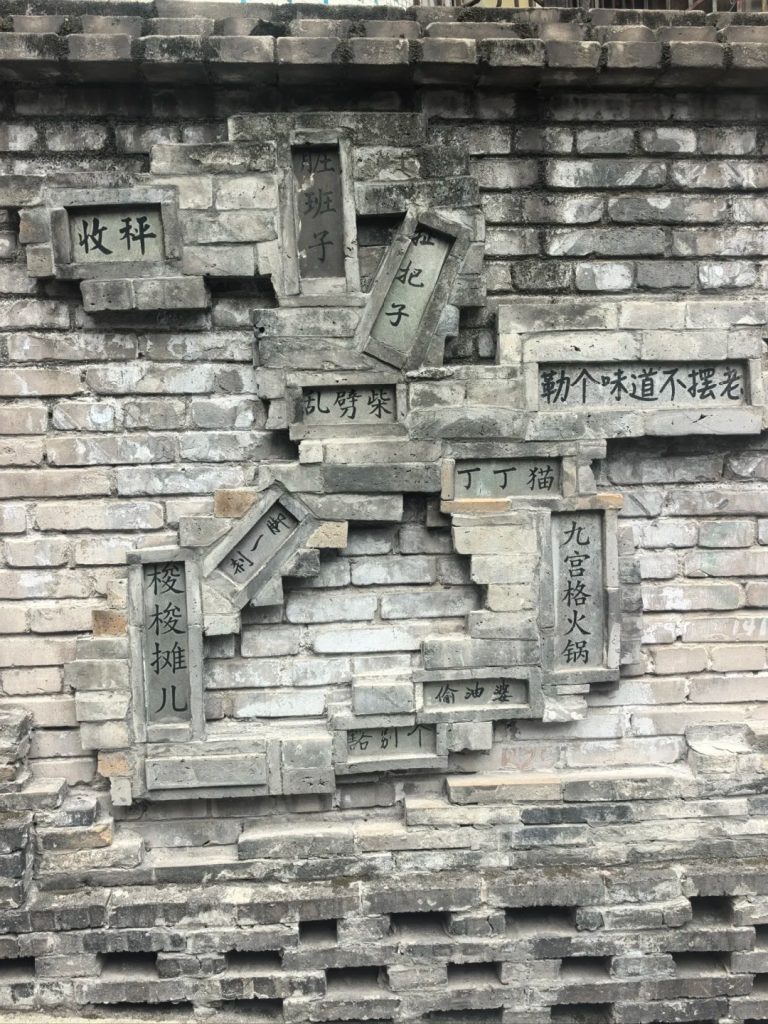

Phonetics aside, Chongqing Hua has its own lexicon. Some words are completely different from Standard Mandarin:
These aren’t random slang. They’re systematic. And if you don’t learn them, you’ll understand every word in a sentence yet miss the meaning entirely.
Here’s what most textbooks won’t tell you: China is not a monolingual country. Even within “Mandarin,” there are dozens of regional variants that differ as much as Portuguese differs from Spanish. In Chongqing—a city of over 30 million people, plus the broader Sichuan Basin—everyday life runs on Chongqing Hua. Street vendors use it. Taxi drivers use it. Families use it. Young people may code-switch between Standard Mandarin and Chongqing Hua depending on context, but in casual settings, the dialect dominates.
If you only learn textbook Mandarin, you can survive in Chongqing. But you won’t live there. You won’t catch the joke at the dinner table. You won’t build the same kind of trust with locals. And you definitely won’t understand why the noodle shop owner just laughed when you tried to order “shuǐjiǎo” (dumplings) instead of “sǔijiǎo.”

So how do you navigate this as a learner? You don’t need to become fluent in Chongqing Hua unless you’re planning a long-term stay. But you do need exposure and strategy.
First, learn the sound change rules. Once you know that zh/ch/sh map to z/c/s, you’ve unlocked about 60% of the phonetic differences. Add the tone shift patterns, and you’re at 80%.
Second, collect high-frequency dialect words. “Sha zi” (啥子) for “what,” “mei de” (没得) for “don’t have / not,” “hao shua” (好耍) for “fun.” Learn them as you learn new vocabulary anyway.
Third—and this is the one most learners skip— spend time in immersive listening. Watch Chongqing-based content on social media. Find podcasts or vlogs where hosts speak naturally. Listen to how locals order food, argue about prices, greet neighbors. Your ear needs hundreds of hours to rewire itself.
This is exactly where structured support makes the difference. When you’re learning a major language with complex regional variation, you can’t rely on textbook audio or classroom drills alone. You need real-world exposure, guided listening practice, and ideally, feedback from people who actually speak the dialect.
That’s why many learners choose to Sojourn Abroad—not just to travel, but to embed themselves in a linguistic environment for weeks or months at a time. It’s important to emphasize: a Sojourn Abroad teaches and immerses you in Standard Mandarin, not a dialect. Whether you go to Beijing, Shanghai, or another city with a strong standard-language environment, the core purpose is to help you solidify standard pronunciation, proper grammar, and natural expression through real daily interactions. In other words, it gives you an intensive training ground for Standard Mandarin. Once you have truly internalized Standard Mandarin through this kind of immersive experience, you will be in a much better position to recognize, understand, and appreciate dialects like Chongqing Hua—without confusing them with the standard language. A focused Sojourn can compress months of classroom learning into weeks. That kind of intensity is irreplaceable.
Of course, not everyone can pack up and move tomorrow. But the principle holds: exposure beats theory. When you can, put yourself in the place where the language lives—where Standard Mandarin is no longer just a textbook recording, but the sound of everyday life.
If you’ve already passed HSK 4 or 5, you might feel like you’ve “finished” learning Mandarin. You haven’t. You’ve finished learning one version of it. Chongqing Hua will humble you in the best way—it will show you what you actually understand versus what you’ve memorized.
Embrace the confusion. Laugh at your mistakes. Locals in Chongqing are famously warm and direct. They won’t correct your grammar gently like a Beijing professor might. They’ll just repeat themselves louder, then laugh with you when you finally get it right.
That directness is a gift. It accelerates learning faster than any polite silence ever could.


For most learners, no. Learn Standard Mandarin first. It’s the official language, the medium of education, and the key to literacy. But once you have a solid foundation (say, HSK 3-4), start adding passive exposure to Southwestern dialects. Listen without pressure. Notice differences without trying to adopt them fully unless you need to.
The goal isn’t perfection. The goal is comprehension—and connection. When you can understand someone speaking Chongqing Hua, you’re not just decoding sounds. You’re signaling respect. You’re saying, “I see you. I hear your version of this language. And I care enough to try.”
That changes everything.
Mandarin learners often treat dialects like Chongqing Hua as obstacles or distractions. They’re neither. They’re the living proof that Chinese isn’t a monolith—it’s a family of voices, each with its own history, humor, and soul. Learning to navigate them doesn’t weaken your Mandarin. It deepens your understanding of the entire language.
So next time you hear “cī le méi?” (吃了没?) instead of “chī le ma?” don’t panic. Listen closer. Lean in. And if you get lost—well, that’s just the sound of real learning starting.
If you’re ready to take your Mandarin beyond the textbook and into the real world, consider planning a Sojourn Abroad—not to learn a dialect, but to master Standard Mandarin in authentic contexts. In that environment, you’ll find that Standard Mandarin stops being an exam subject and becomes the language you live in. And when you later encounter Chongqing Hua, Sichuan Hua, or other dialects, you’ll have the one skill that separates truly advanced learners from the rest: the ability to move between standard and regional forms with confidence, not confusion. That’s what real proficiency looks like.
Thank you so much for contacting Sojourn Abroad! We can’t wait to welcome you in China!